


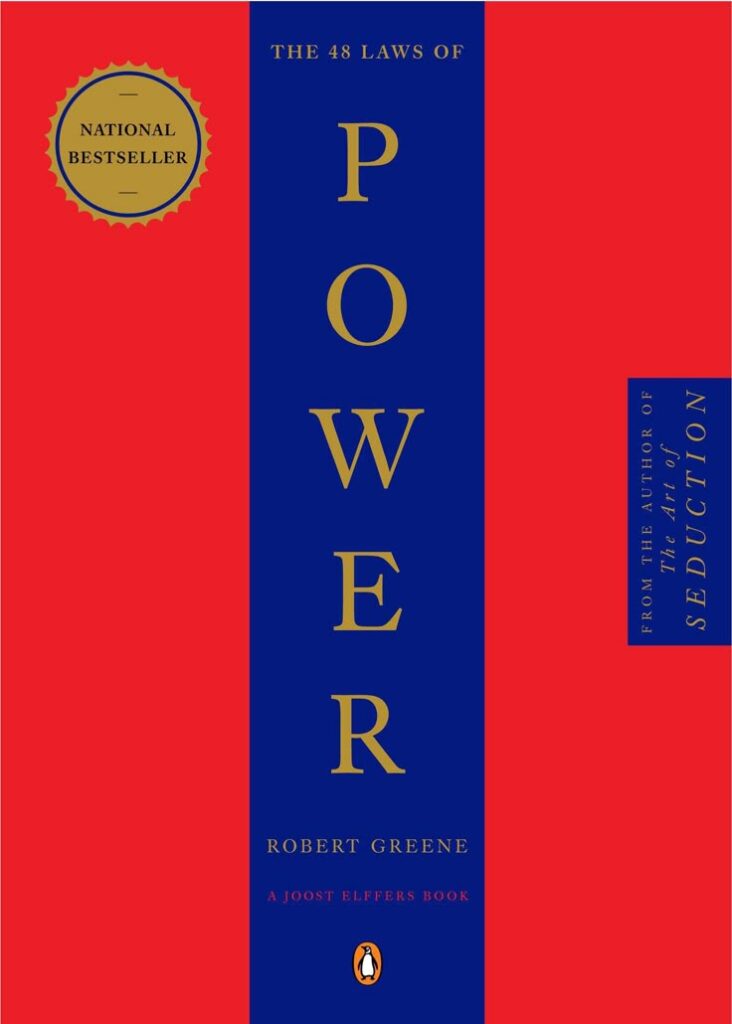
In The 48 Laws of Power Summary, the book is not a moral guide—it is a strategic manual for mastering influence, perception, and control.
A manual about influence. About strategy. About how power truly moves in boardrooms, politics, creative industries, and private relationships. It doesn’t tell you how the world should work. It shows you how it does work.
Robert Greene distilled centuries of political maneuvering, royal courts, war strategies, and psychological games into 48 sharp, unapologetic principles. Some feel manipulative. Some feel ruthless. All of them are uncomfortable — because they are real.
“Powerful people impress and intimidate by saying less.”
This book is about understanding that reality — so you are not blindsided by it.
The Core Philosophy: Power Is Perception
Power is rarely about brute strength. It is about control of image, timing, emotion, and narrative.
One of the first lessons:
“Never outshine the master.”
Greene warns that making superiors feel insecure is dangerous. Power flows upward, and survival often depends on making those above you feel comfortably superior.
Another foundational rule:
“Conceal your intentions.”
Transparency may be praised in theory — but unpredictability wins in strategy. When people cannot read your next move, they cannot defend against it.
Greene repeatedly returns to one theme:
Reputation is everything.
“So much depends on reputation — guard it with your life.”
Once your image weakens, attacks multiply. In a competitive world, perception becomes armor.
Silence, Strategy, and Psychological Control
Many laws revolve around restraint.
“Always say less than necessary.”
The more you talk, the more ordinary you appear — and the less control you hold. Silence creates gravity.
Another brutal observation:
“Never put too much trust in friends; learn how to use enemies.”
Friends may betray out of envy. Enemies, once converted, often prove more loyal because they have more to prove. It’s a cold calculation — but history repeatedly confirms it.
Greene also emphasizes emotional discipline:
“When you show yourself to the world and display your talents, you naturally stir all kinds of resentment, envy, and other manifestations of insecurity.”
Emotional reactions weaken position. Calm observation strengthens it. Anger exposes strategy. Patience conceals it.
The Art of Image and Attention
In a world driven by spectacle, invisibility is weakness.
“Court attention at all costs.”
Greene argues that obscurity kills influence. You must create presence — sometimes even controversy — to command attention.
But attention must be controlled.
“Never appear too perfect.”
Perfection breeds resentment. Strategic flaws make you human. Controlled mystery makes you magnetic.
He also warns against isolation:
“Isolation is dangerous.”
Power requires circulation — allies, information, access. Retreating into safety often makes you an easier target.
Ruthlessness and Realism
Perhaps the most controversial law:
“Crush your enemy totally.”
Half measures invite revenge. Weak victories create future threats.
And another timeless principle:
“Plan all the way to the end.”
Most people focus on immediate wins. Strategists anticipate consequences.
Greene’s worldview is clear:
Power respects boldness.
“Enter action with boldness.”
Hesitation infects execution. Decisiveness creates authority.
Two Important Things About the Author
Robert Greene is not a motivational writer. He is a historian of power.
- Before writing, Greene worked over 80 different jobs — from Hollywood assistant to magazine editor. His exposure to corporate politics heavily influenced this book.
- He studies historical figures deeply — from Machiavelli to Napoleon — extracting patterns of power that repeat across centuries.
His work is analytical, not emotional. Observational, not moral.
Why Read This Book?
Because whether you like it or not, power dynamics affect your career, business, social life, and influence.
You may never use every law.
But if you don’t understand them, someone else might use them on you.
This book sharpens awareness. It teaches you to recognize manipulation, strategic timing, and image management. It helps you see the game — even if you choose not to play ruthlessly.
Who Should Read It?
- Entrepreneurs navigating competition
- Creators building public image
- Corporate professionals facing office politics
- Leaders managing perception
- Anyone who feels blindsided by power games
It is not for the overly idealistic.
It is for the observant.
Final Thought
The 48 Laws of Power is not about becoming evil.
It is about becoming aware.
Power doesn’t disappear because you ignore it.
Understanding it is protection.
Disclosure: This article contains affiliate links.
Explore more book summaries on Reading Axis. Book Summaries
Read the summary of Atomic Habits – Transform your life in 4 Laws https://thereadingaxis.com/atomic-habits-summary-4-powerful-laws-to-build-good-habits-and-break-bad-ones/
Read the summary of Psychology of Money – Timeless lessons https://thereadingaxis.com/psychology-of-money-summary/
Read the summary of Deep Work https://thereadingaxis.com/deep-work-book-summary/