


Book written By Morgan Housel
Money Is a Behavioral Skill
Money is one of the most important forces in our lives. It affects our freedom, our choices, and our peace of mind. Yet, most people misunderstand how it truly works.
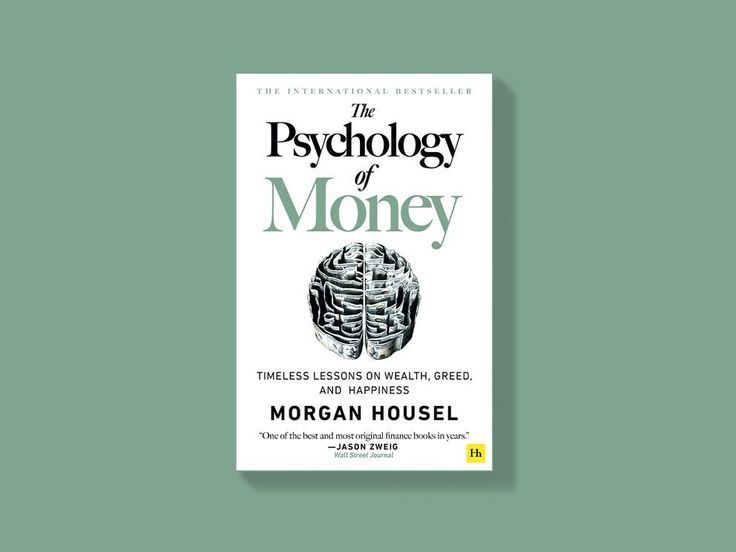
In The Psychology of Money Summary , we will see how Morgan Housel explains that financial success is not determined by intelligence alone. A genius who lacks emotional control can become a financial disaster, while an ordinary person with no formal financial education can quietly build lasting wealth.
As Morgan Housel writes,
“Financial success is not a hard science. It’s a soft skill, where how you behave is more important than what you know.”
Finance is not purely about formulas, calculations, or strategies. It is about behavior. It is about patience, discipline, and emotional control. Money is influenced by luck, risk, and time. Intelligence matters, but behavior matters more.
Money is everywhere. It affects every aspect of our lives, yet most people spend very little time truly understanding it. Unlike physics, which follows fixed laws, finance is driven by human emotions, decisions, and uncertainty.
Your Experience Shapes Your Financial Decisions
Every person has a unique relationship with money. People from different countries, generations, and economic backgrounds behave differently. But no one is crazy.
As the author explains,
“No one is crazy. People make financial decisions based on their own unique experiences.”
Someone who grew up in poverty will see money differently from someone who grew up in wealth. Someone who experienced inflation, unemployment, or economic crisis will behave differently from someone who never faced those conditions.
Our personal experiences shape our financial behavior. They influence how we earn, save, spend, and invest.
Morgan Housel explains this clearly:
“Your personal experiences with money make up maybe 0.00000001% of what’s happened in the world, but maybe 80% of how you think the world works.”
This is why financial decisions are deeply personal. They are shaped by memory, fear, hope, and experience.
The Hidden Role of Luck and Risk
Luck and risk play a bigger role in financial outcomes than most people realize.
Some people succeed because of skill, but also because of timing and opportunity. Others fail despite making reasonable decisions. This does not mean effort is meaningless, but it means outcomes are never fully within our control.
As Morgan Housel writes,
“Nothing is as good or as bad as it seems.”
This is why humility is essential. We must avoid blindly copying successful people or harshly judging unsuccessful ones. Every financial outcome is a combination of behavior, time, luck, and risk.
The Power of Knowing When You Have Enough
One of the most important financial skills is knowing when you have enough.
Many people risk everything they have for something they do not need. The desire for more money, more status, and more power has no limit.
But this endless pursuit is dangerous.
Morgan Housel explains this powerfully:
“Enough is realizing that the opposite—an insatiable appetite for more—will push you to the point of regret.”
Money increases ambition faster than it increases happiness. Social comparison makes this worse. When people compare themselves constantly, their expectations rise endlessly.
True wealth begins when you learn to control your desires.
Compounding Builds Wealth Quietly
Compounding is one of the most powerful forces in building wealth.
Wealth does not grow instantly. It grows slowly, through patience and consistency. Small actions repeated over long periods create extraordinary outcomes.
As Morgan Housel explains,
“The highest form of wealth is the ability to wake up every morning and say, ‘I can do whatever I want today.’”
This freedom is built through long-term thinking.
Compounding works best when it is uninterrupted. The key is not earning extremely high returns, but earning steady returns and allowing time to do its work.
Patience is more valuable than intelligence.
Getting Wealthy Is Different From Staying Wealthy
There is an important difference between getting wealthy and staying wealthy.
Building wealth often requires risk, optimism, and action. But preserving wealth requires humility, discipline, and caution.
As Morgan Housel writes,
“Getting money requires taking risks, being optimistic, and putting yourself out there. But keeping money requires the opposite of taking risk.”
Survival is the foundation of financial success. Compounding only works if you avoid catastrophic losses.
The most important part of any financial plan is preparing for uncertainty.
Freedom Is the Greatest Return Money Provides
The true value of money is not luxury. It is control.
Money gives you control over your time. It gives you independence. It allows you to live without constant financial fear.
Research shows that people value control over their time more than income, status, or possessions.
Freedom is the ultimate return money provides.
Wealth Is What You Don’t See
Many people try to appear wealthy by buying expensive cars, watches, and luxury items. But these visible symbols are not true wealth.
Morgan Housel explains,
“Wealth is what you don’t see.”
Wealth is the money saved. The money invested. The money not spent.
Spending money to impress others is the fastest way to destroy wealth.
True wealth provides security, flexibility, and freedom.
Saving Creates Independence
Saving money is one of the most powerful financial habits.
You do not need a high income to build wealth. You need discipline and consistency.
As the author explains,
“You can build wealth without a high income, but you have no chance of building wealth without a high savings rate.”
Savings create independence. They give you options. They give you control over your life.
Prepare for Uncertainty
The future is always uncertain. Unexpected events will always happen.
This is why financial plans must include room for error.
Morgan Housel writes,
“The most important part of every plan is planning on your plan not going according to plan.”
You cannot predict the future perfectly. But you can prepare for uncertainty.
Flexibility and survival are more important than perfection.
Define Your Own Financial Path
Another important lesson is understanding that everyone is playing a different financial game.
Different people have different goals, responsibilities, and time horizons.
As Morgan Housel writes,
“Beware of taking financial cues from people playing a different game than you are.”
You must define your own goals. You must play your own game.
Financial success is personal.
Wealth Is Built Through Behavior
In the end, wealth is not built through intelligence alone.
It is built through behavior.
It is built through patience, discipline, humility, and long-term thinking.
As Morgan Housel writes,
“Doing well with money has little to do with how smart you are and a lot to do with how you behave.”
Wealth is built quietly.
Not through shortcuts.
Not through luck alone.
But through consistent, intentional behavior over time.
True wealth is not about status.
It is about freedom.
Disclosure: This article contains affiliate links.
Explore more book summaries on Reading Axis. Book Summaries
Read the summary of Atomic Habits – Transform your life in 4 Laws https://thereadingaxis.com/atomic-habits-summary-4-powerful-laws-to-build-good-habits-and-break-bad-ones/



3 thoughts on “The Psychology of Money Summary: Timeless Lessons on Wealth, Behavior, and Financial Freedom”