

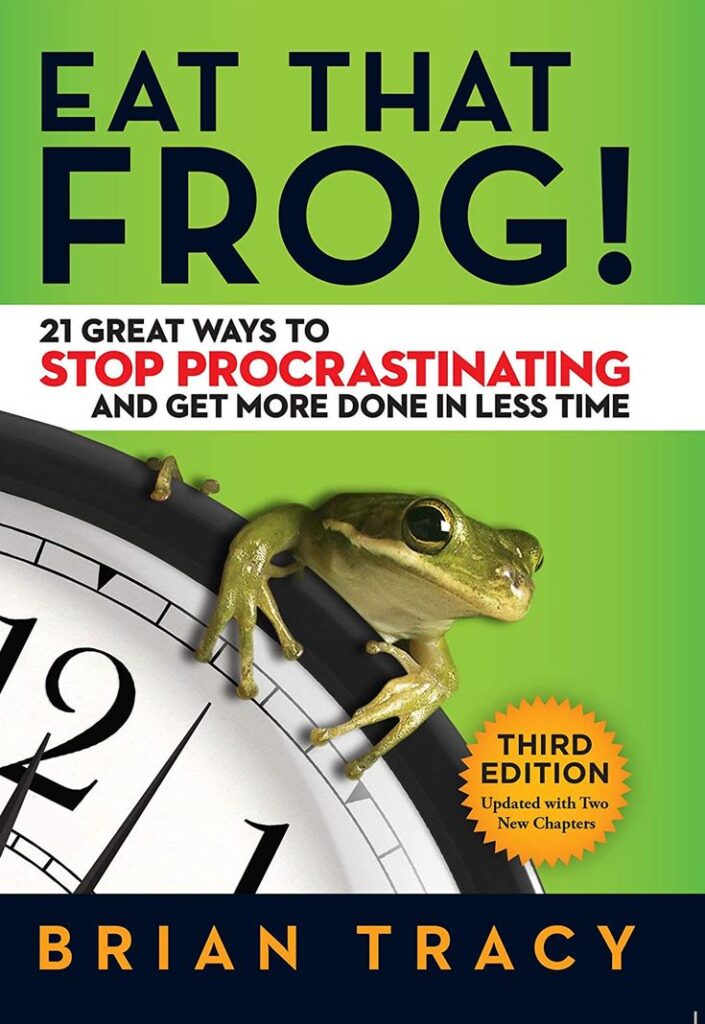
Eat that Frog summary
✍️ About the Author: Brian Tracy
Brian Tracy is one of the most recognized voices in personal development and productivity, known for translating success principles into practical, actionable systems. His work focuses not on motivation alone, but on execution—how disciplined habits and focused action ultimately shape achievement. In Eat That Frog!, Tracy tackles one of the most universal struggles of modern life: procrastination.
Rather than presenting complicated productivity theories, the book delivers a direct and highly practical philosophy built around a simple but transformative principle—do the hardest and most important task first.
🌿 The Meaning Behind “Eating the Frog”
The unusual title comes from an old saying often attributed to Mark Twain: if the first thing you do each morning is eat a live frog, the rest of your day will feel easier by comparison. Tracy uses the “frog” as a metaphor for your most important, challenging, and high-impact task—the one you are most likely to delay.
“If you have to eat two frogs, eat the ugliest one first.”
This idea immediately reframes productivity. Most people instinctively avoid difficult work, turning instead toward smaller, easier tasks that provide temporary comfort. But Tracy argues that true progress rarely comes from convenience. It comes from confronting resistance directly.
The longer important tasks are delayed, the heavier they become mentally. Anxiety builds, focus weakens, and procrastination quietly drains energy. By completing the hardest task first, momentum replaces avoidance.
🧠 Productivity Is Less About Time and More About Priorities
One of the book’s most powerful insights is that productivity is not fundamentally a time-management problem—it is a decision-making problem. Everyone has limited hours, yet some individuals consistently create more meaningful results because they understand how to prioritize effectively.
“There is never enough time to do everything, but there is always enough time to do the most important thing.”
This distinction changes the entire conversation around productivity. The goal is not to become endlessly busy. The goal is to identify what genuinely matters and focus intensely on it.
Tracy repeatedly emphasizes that success often depends on the ability to separate the vital few from the trivial many.
⚡ Clarity Creates Action
A recurring theme throughout the book is clarity. Procrastination often thrives in confusion. When goals are vague, tasks feel overwhelming and motivation fades. But when objectives become specific and actionable, resistance begins to shrink.
Tracy encourages breaking goals into clear steps, creating written plans, and identifying priorities before the day begins.
“Goals are the fuel in the furnace of achievement.”
This process transforms productivity from reactive chaos into intentional movement.
Clarity eliminates unnecessary hesitation. Once you know exactly what matters most, action becomes simpler.
🔥 Discipline Over Motivation
Unlike many productivity books that rely heavily on inspiration, Eat That Frog! focuses on discipline. Tracy argues that waiting to “feel motivated” is unreliable because emotions fluctuate constantly.
“Successful people are simply those with successful habits.”
The ability to act consistently, especially when tasks feel uncomfortable, becomes the defining trait of high performers.
Discipline, in this context, is not punishment. It is the ability to prioritize long-term achievement over short-term comfort.
This is why the metaphor of eating the frog works so effectively—it trains the mind to confront discomfort early instead of avoiding it endlessly.
🌊 The Psychology of Momentum
One of the most practical lessons in the book is the concept of momentum. Beginning difficult work is often the hardest part. But once action starts, focus and energy tend to increase naturally.
Tracy explains that completing meaningful tasks releases psychological satisfaction, reinforcing confidence and motivation.
“Your ability to select your most important task at each moment is the key to high levels of performance.”
Momentum creates a cycle where productivity generates more productivity.
The danger of procrastination, meanwhile, is not only lost time—it is lost mental energy. Unfinished important tasks quietly occupy attention even when ignored.
🛡️ Focus in the Age of Distraction
Although written before today’s hyper-digital environment fully emerged, the book feels even more relevant now. Constant notifications, multitasking, and fragmented attention have made deep focus increasingly rare.
Tracy repeatedly emphasizes concentration as a competitive advantage.
Single-tasking, uninterrupted work sessions, and intentional elimination of distractions allow individuals to produce higher-quality results in less time.
“Continuous learning is the minimum requirement for success in any field.”
This mindset extends beyond productivity into self-development itself. Focus is not merely about getting more done—it is about becoming more capable over time.
💡 Small Daily Improvements Compound Into Extraordinary Results
One of the deeper messages beneath the book’s practical advice is the power of consistency. Productivity is not transformed overnight. It evolves through repeated daily habits.
Each day you choose discipline over delay, clarity over confusion, and focus over distraction, you strengthen the habits that eventually define success.
The process appears small in the moment, but over time the results become profound.
✨ Why This Book Stays With You
Eat That Frog! remains impactful because of its simplicity and practicality. It does not overwhelm readers with complicated systems or unrealistic promises. Instead, it offers timeless principles that can be applied immediately.
“The key to success is action.”
The book stays with readers because it transforms productivity from something abstract into something deeply actionable. It reminds you that meaningful progress begins not with perfect conditions, but with the willingness to start.
And often, the most important breakthrough comes from finally facing the task you’ve been avoiding.
🎯 Who Should Read This Book
✔️ Anyone struggling with procrastination and lack of focus
✔️ Students and professionals seeking better productivity systems
✔️ Entrepreneurs aiming to improve execution and discipline
✔️ Readers interested in practical time management strategies
💭 Final Reflection
Eat That Frog! is ultimately a book about intentional action. Brian Tracy reminds us that success rarely depends on doing everything—it depends on doing the right things consistently and without delay.
“Winners develop the habit of doing the things losers don’t like to do.”
And perhaps that is the book’s deepest lesson: growth often begins the moment you stop avoiding discomfort and start moving directly toward it.
Disclosure: This article contains affiliate links.
Explore more book summaries on Reading Axis. Book Summaries
Read the summary of Atomic Habits – Transform your life in 4 Laws https://thereadingaxis.com/atomic-habits-summary-4-powerful-laws-to-build-good-habits-and-break-bad-ones/
Read the summary of Psychology of Money – Timeless lessons https://thereadingaxis.com/psychology-of-money-summary/
Read the summary of Deep Work https://thereadingaxis.com/deep-work-book-summary/
Read the summary of 48 Laws of Power https://thereadingaxis.com/48-laws-of-power-summary-robert-greene/
Read the summary of Rich Dad Poor Dad https://thereadingaxis.com/rich-dad-poor-dad-summary/
Read the summary of Dopamine Detox https://thereadingaxis.com/dopamine-detox-book-summary/
Read the summary of The Alchemist https://thereadingaxis.com/the-alchemist-summary-personal-legend/
Read the summary of Can’t hurt me https://thereadingaxis.com/cant-hurt-me-summary-david-goggins/