

Pride and Prejudice summary
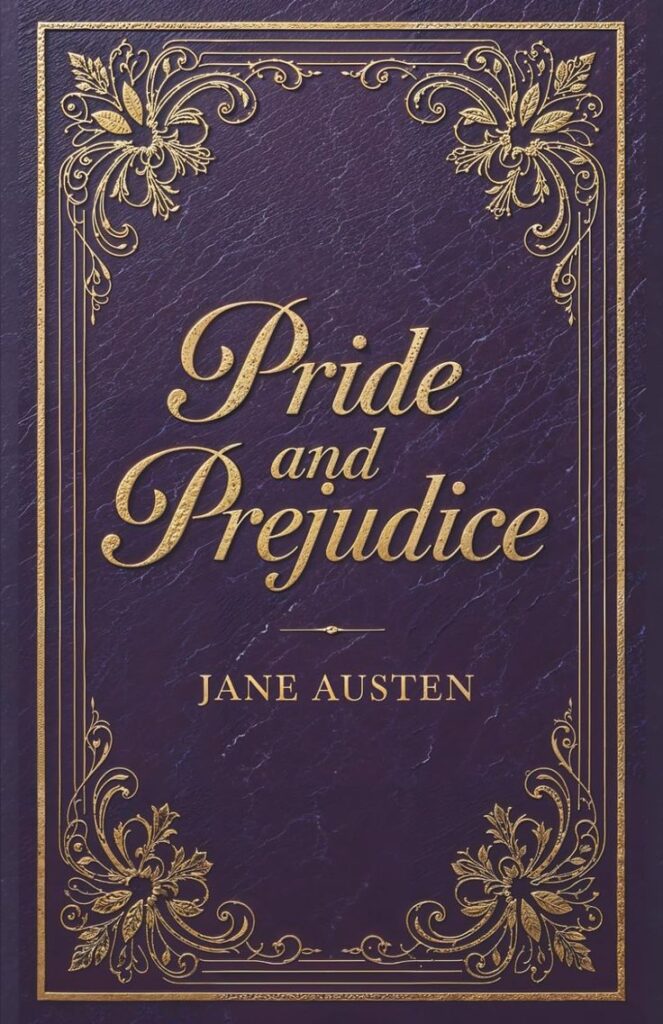
✍️ About the Author: Jane Austen
Few writers have shaped English literature as profoundly as Jane Austen. Writing during the early nineteenth century, Austen possessed a remarkable ability to explore human relationships, social expectations, and personal growth with wit, elegance, and psychological insight. Her novels continue to captivate readers not because they offer grand adventures or dramatic spectacles, but because they reveal the complexities of everyday human behavior with extraordinary precision.
Published in 1813, Pride and Prejudice remains Austen’s most celebrated work. While often described as a romance, the novel is far more than a love story. It is an exploration of character, perception, social status, family dynamics, and the subtle ways in which pride and prejudice shape human relationships.
At its heart, it asks a timeless question: how often do our assumptions prevent us from truly understanding others?
🌿 First Impressions and the Birth of Misunderstanding
The story unfolds in rural England and centers on Elizabeth Bennet, one of literature’s most beloved heroines. Intelligent, spirited, and fiercely independent, Elizabeth possesses a sharp mind and a strong sense of self. When the wealthy and reserved Mr. Darcy enters her social circle, their relationship begins not with admiration but with misunderstanding.
“She is tolerable; but not handsome enough to tempt me.”
Darcy’s dismissive remark during their first meeting immediately shapes Elizabeth’s opinion of him. To her, he appears arrogant, proud, and unnecessarily aloof. Meanwhile, Darcy views Elizabeth through his own lens of social assumptions and inherited expectations.
What makes this beginning so compelling is its realism. Austen understands that people rarely see one another clearly at first. Perception is often filtered through pride, ego, insecurity, and limited information.
The novel’s central conflict emerges not from external obstacles, but from internal misconceptions.
🧠 Elizabeth Bennet: Intelligence, Independence, and Growth
Elizabeth stands apart from many literary heroines of her era because she refuses to define herself solely through marriage or social advancement. She values intelligence, integrity, and genuine affection above wealth or status.
“I could easily forgive his pride, if he had not mortified mine.”
This line reveals one of Austen’s greatest insights: Elizabeth is not immune to pride herself. While she quickly identifies flaws in others, she often overlooks her own biases.
Throughout the novel, Elizabeth’s journey becomes one of self-discovery. She learns that intelligence alone does not guarantee wisdom and that confidence can sometimes disguise prejudice.
Her growth is not about becoming someone different; it is about seeing more clearly.
Austen’s genius lies in allowing Elizabeth to remain strong and independent while also acknowledging her mistakes.
⚡ Mr. Darcy and the Transformation of Character
At first glance, Fitzwilliam Darcy appears to embody privilege and arrogance. Wealthy, respected, and socially influential, he often struggles to communicate warmth or vulnerability.
Yet as the novel progresses, Austen gradually reveals a far more complex individual beneath the surface.
“My good opinion once lost is lost forever.”
Darcy initially appears governed by judgment and pride, but he possesses qualities that become increasingly evident: loyalty, generosity, responsibility, and deep emotional sincerity.
One of the novel’s most powerful achievements is its refusal to reduce characters to simple categories of good or bad. Darcy is neither villain nor hero. He is a flawed human being capable of growth.
His transformation becomes one of the novel’s most satisfying elements because it emerges not from dramatic events but from introspection and humility.
🌊 Love Beyond Wealth and Social Expectations
While Pride and Prejudice is undeniably a romance, Austen uses love as a vehicle for exploring deeper themes.
Marriage in the novel exists within a society heavily influenced by economics, inheritance, and social status. Women often faced limited opportunities, making marriage one of the few available paths toward financial security.
“There is no charm equal to tenderness of heart.”
Against this backdrop, Austen contrasts different relationships throughout the story. Some marriages are based on convenience, others on desperation, and others on social ambition.
Elizabeth and Darcy’s relationship ultimately succeeds because it evolves beyond superficial attraction or material advantage. Their connection develops through mutual respect, personal growth, and genuine understanding.
Austen suggests that meaningful love requires seeing another person clearly—not as an ideal, but as a human being.
🔥 Pride and Prejudice as Universal Human Flaws
The title itself reveals the novel’s deeper purpose.
Pride and prejudice are not confined to a single character. Nearly everyone in the story exhibits them in some form. Darcy’s pride initially blinds him to his own shortcomings. Elizabeth’s prejudice prevents her from recognizing Darcy’s true character. Other characters fall victim to vanity, social ambition, gossip, or self-deception.
“Vanity and pride are different things, though the words are often used synonymously.”
This distinction highlights Austen’s psychological sophistication. She examines not only what people believe, but why they believe it.
The novel remains relevant because these tendencies remain deeply human. People still judge too quickly. They still allow assumptions to shape perception. They still struggle to separate appearance from reality.
🏛️ Society, Class, and Social Expectations
Beyond romance, Pride and Prejudice serves as a subtle critique of social structures. Austen explores how class influences relationships, opportunities, and personal choices.
Characters frequently evaluate one another based on wealth, family connections, and social standing. These judgments often distort authentic human connection.
“People themselves alter so much, that there is something new to be observed in them forever.”
Through this observation, Austen quietly challenges rigid social assumptions. Human beings cannot be fully understood through status alone.
Character matters more than position.
This message continues to resonate in every generation.
✨ Why This Book Stays With You
Pride and Prejudice remains beloved because it combines emotional warmth with remarkable psychological insight. It is a story about love, but also about humility, self-awareness, and personal growth.
“I was blind, partial, prejudiced, absurd.”
Elizabeth’s realization captures the essence of the novel. Growth begins when individuals acknowledge their own limitations.
Readers return to the story because it reflects enduring truths about relationships and human nature. Every generation recognizes itself within Austen’s characters.
The social setting may belong to another era, but the emotional realities remain timeless.
🎯 Who Should Read This Book
✔️ Readers who enjoy classic literature and timeless romance
✔️ Fans of character-driven stories focused on personal growth and relationships
✔️ Students exploring themes of love, class, and social expectations
✔️ Anyone interested in beautifully written novels about human nature and self-discovery
💭 Final Reflection
Pride and Prejudice is ultimately a novel about learning to see clearly. Jane Austen reminds us that first impressions are often incomplete, assumptions can be misleading, and genuine understanding requires humility.
“Think only of the past as its remembrance gives you pleasure.”
Through Elizabeth and Darcy, Austen demonstrates that meaningful relationships are built not upon perfection, but upon growth, honesty, and mutual respect.
More than two centuries after its publication, the novel continues to resonate because it captures something fundamentally human: the journey from judgment to understanding, from pride to humility, and from prejudice to love.
Disclosure: This article contains affiliate links.
Explore more book summaries on Reading Axis. Book Summaries
Read the summary of Atomic Habits – Transform your life in 4 Laws https://thereadingaxis.com/atomic-habits-summary-4-powerful-laws-to-build-good-habits-and-break-bad-ones/
Read the summary of Psychology of Money – Timeless lessons https://thereadingaxis.com/psychology-of-money-summary/
Read the summary of Deep Work https://thereadingaxis.com/deep-work-book-summary/
Read the summary of 48 Laws of Power https://thereadingaxis.com/48-laws-of-power-summary-robert-greene/
Read the summary of Rich Dad Poor Dad https://thereadingaxis.com/rich-dad-poor-dad-summary/
Read the summary of Dopamine Detox https://thereadingaxis.com/dopamine-detox-book-summary/
Read the summary of The Alchemist https://thereadingaxis.com/the-alchemist-summary-personal-legend/
Read the summary of Can’t hurt me https://thereadingaxis.com/cant-hurt-me-summary-david-goggins/