

Jane Eyre Summary
✍️ About the Author: Charlotte Brontë
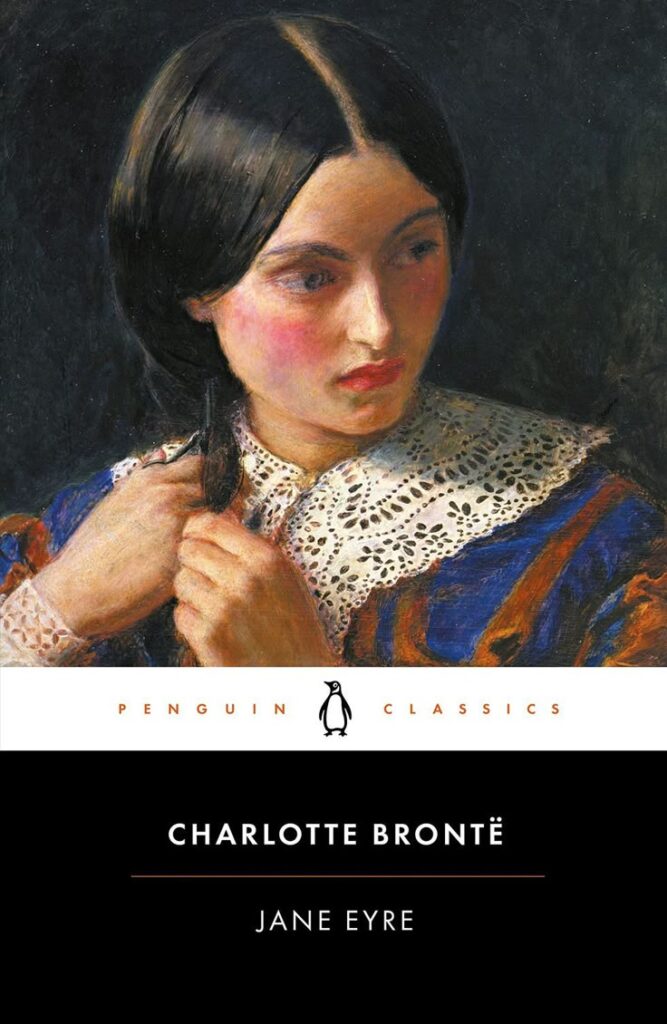
Charlotte Brontë remains one of the most influential voices in English literature. Writing during the Victorian era, she challenged many social conventions of her time by creating female characters who possessed intelligence, independence, emotional depth, and moral conviction. Through Jane Eyre, published in 1847, Brontë delivered a novel that transcended the traditional romance genre and became a profound exploration of identity, dignity, freedom, and personal integrity.
More than a love story, Jane Eyre is the journey of a woman determined to preserve her sense of self in a world that repeatedly attempts to diminish her. It is a novel about resilience in the face of hardship, about finding one’s voice despite oppression, and about choosing self-respect even when it comes at a great personal cost.
More than a century and a half after its publication, the story continues to resonate because its emotional truths remain remarkably modern.
🌿 A Childhood Marked by Isolation and Hardship
Jane Eyre’s story begins not with romance or adventure, but with loneliness. Orphaned at a young age, Jane grows up under the care of her cruel aunt, Mrs. Reed, who treats her as an unwanted burden rather than a member of the family.
From the very beginning, Jane experiences rejection, humiliation, and emotional neglect.
“I am no bird; and no net ensnares me: I am a free human being with an independent will.”
Although spoken later in the novel, this quote reflects the spirit that exists within Jane from childhood. Despite her difficult circumstances, she refuses to surrender her sense of dignity.
Her years at Lowood School further test her endurance. The institution is harsh, disciplined, and often unforgiving. Yet it is also where Jane begins to develop the qualities that define her character: intelligence, patience, resilience, and moral strength.
Rather than allowing suffering to harden her heart, Jane learns how to persevere without losing her humanity.
Brontë portrays adversity not as something that destroys Jane, but as something that shapes her inner strength.
🧠 Jane Eyre: A Heroine Defined by Integrity
What makes Jane Eyre one of literature’s most beloved protagonists is not beauty, wealth, or social status. In fact, she possesses none of these advantages.
Instead, her power comes from her character.
Jane is thoughtful, perceptive, emotionally intelligent, and deeply principled. She longs for love and belonging, but she refuses to sacrifice her values to obtain them.
“Do you think I am an automaton? — a machine without feelings?”
This passionate declaration captures one of the novel’s central themes: the desire to be seen, respected, and valued as a complete human being.
Jane rejects the notion that social class determines worth. She insists on her emotional and intellectual equality even when society refuses to acknowledge it.
In doing so, she becomes one of literature’s earliest and most powerful symbols of female independence.
🏰 Thornfield Hall and the Mystery of Mr. Rochester
The novel’s atmosphere changes dramatically when Jane becomes a governess at Thornfield Hall, the grand estate of Edward Rochester.
The Gothic setting introduces mystery, suspense, and emotional complexity. Strange noises echo through the halls. Secrets linger behind locked doors. An unsettling sense of uncertainty surrounds the estate.
At the center of this mystery stands Rochester himself.
“I have for the first time found what I can truly love—I have found you.”
Unlike many romantic heroes of the era, Rochester is deeply flawed. He is intelligent yet troubled, passionate yet secretive, compassionate yet imperfect.
The relationship between Jane and Rochester develops gradually through conversation, intellectual connection, and emotional honesty. Their bond is built not merely on attraction but on mutual understanding.
For perhaps the first time in her life, Jane feels genuinely seen.
Yet Brontë refuses to present love as simple or idealized. The relationship is complicated by secrets, social inequalities, and moral dilemmas that force Jane to make difficult choices.
⚡ Love Without Self-Respect Is Not True Love
One of the novel’s greatest strengths is its refusal to portray romance as the ultimate goal.
When Jane discovers the truth about Rochester’s hidden past, she faces a devastating decision. Remaining with him would satisfy her deepest emotional desires. Leaving would protect her principles.
“Laws and principles are not for the times when there is no temptation.”
This moment represents the moral heart of the novel.
Jane chooses integrity over immediate happiness.
Her decision demonstrates extraordinary courage because it requires sacrificing what she wants most in order to remain true to herself.
Brontë suggests that genuine love cannot exist where self-respect is compromised. Love must enhance freedom rather than destroy it.
This message feels remarkably progressive even by modern standards.
🌊 Freedom, Independence, and Personal Growth
Following her departure from Thornfield, Jane embarks on a journey that becomes as much spiritual as physical.
Separated from Rochester, she is forced to confront questions of identity, purpose, and belonging.
For perhaps the first time, Jane begins to build a life entirely on her own terms.
“I care for myself. The more solitary, the more friendless, the more unsustained I am, the more I will respect myself.”
This powerful statement captures the novel’s enduring appeal.
Jane’s worth does not depend upon external validation. It does not come from wealth, marriage, or social approval.
It comes from within.
The novel’s exploration of independence remains one of its most inspiring elements, particularly for readers seeking stories about personal empowerment and resilience.
🔥 The Gothic Novel Beneath the Romance
Although often categorized as a romance, Jane Eyre also functions as a Gothic masterpiece.
Storms, hidden secrets, eerie corridors, psychological tension, and supernatural undertones create an atmosphere that is both haunting and emotionally charged.
The Gothic elements are not merely decorative. They reflect the internal struggles of the characters themselves.
Fear, desire, isolation, guilt, and hope all become part of the novel’s emotional landscape.
Brontë masterfully blends psychological depth with dramatic storytelling, creating a reading experience that feels both intimate and unforgettable.
🌟 The Search for Equality in Love
One of the most revolutionary aspects of Jane Eyre is its vision of romantic partnership.
Jane never seeks domination over Rochester, nor does she accept being dominated by him.
Instead, she seeks equality.
“Reader, I married him.”
This famous final line carries profound significance. Jane tells her story on her own terms. She remains the narrator of her own life.
By the novel’s conclusion, love becomes possible because both characters have undergone transformation. Their relationship can succeed only when respect, honesty, and equality are finally present.
Brontë’s vision of love is therefore not about rescue but partnership.
✨ Why This Book Stays With You
Jane Eyre continues to captivate readers because it combines emotional intensity with profound psychological insight.
It is a novel about love, but also about dignity.
It is a story about romance, but also about freedom.
It is a tale of hardship, but also of resilience.
“Life appears to me too short to be spent in nursing animosity or registering wrongs.”
The novel stays with readers because Jane’s journey feels deeply human. Her struggles for acceptance, independence, and self-worth remain universal.
Every generation discovers something meaningful within her story.
🎯 Who Should Read This Book
✔️ Readers who enjoy classic literature and Gothic romance
✔️ Fans of emotionally rich stories centered on personal growth and resilience
✔️ Students exploring themes of love, identity, morality, and independence
✔️ Anyone seeking a timeless novel about courage, self-respect, and inner strength
💭 Final Reflection
Jane Eyre is ultimately a novel about remaining true to oneself in a world that constantly demands compromise.
Charlotte Brontë created a heroine who refuses to surrender her dignity, even when faced with loneliness, heartbreak, and uncertainty.
“I am no bird; and no net ensnares me.”
That declaration continues to resonate because it speaks to something timeless: the human desire for freedom, authenticity, and self-respect.
More than a romance, Jane Eyre is a celebration of inner strength—the kind that allows individuals not merely to survive life’s challenges, but to emerge from them with their identity intact.
Disclosure: This article contains affiliate links.
Explore more book summaries on Reading Axis. Book Summaries
Read the summary of Atomic Habits – Transform your life in 4 Laws https://thereadingaxis.com/atomic-habits-summary-4-powerful-laws-to-build-good-habits-and-break-bad-ones/
Read the summary of Psychology of Money – Timeless lessons https://thereadingaxis.com/psychology-of-money-summary/
Read the summary of Deep Work https://thereadingaxis.com/deep-work-book-summary/
Read the summary of 48 Laws of Power https://thereadingaxis.com/48-laws-of-power-summary-robert-greene/
Read the summary of Rich Dad Poor Dad https://thereadingaxis.com/rich-dad-poor-dad-summary/
Read the summary of Dopamine Detox https://thereadingaxis.com/dopamine-detox-book-summary/
Read the summary of The Alchemist https://thereadingaxis.com/the-alchemist-summary-personal-legend/
Read the summary of Can’t hurt me https://thereadingaxis.com/cant-hurt-me-summary-david-goggins/