

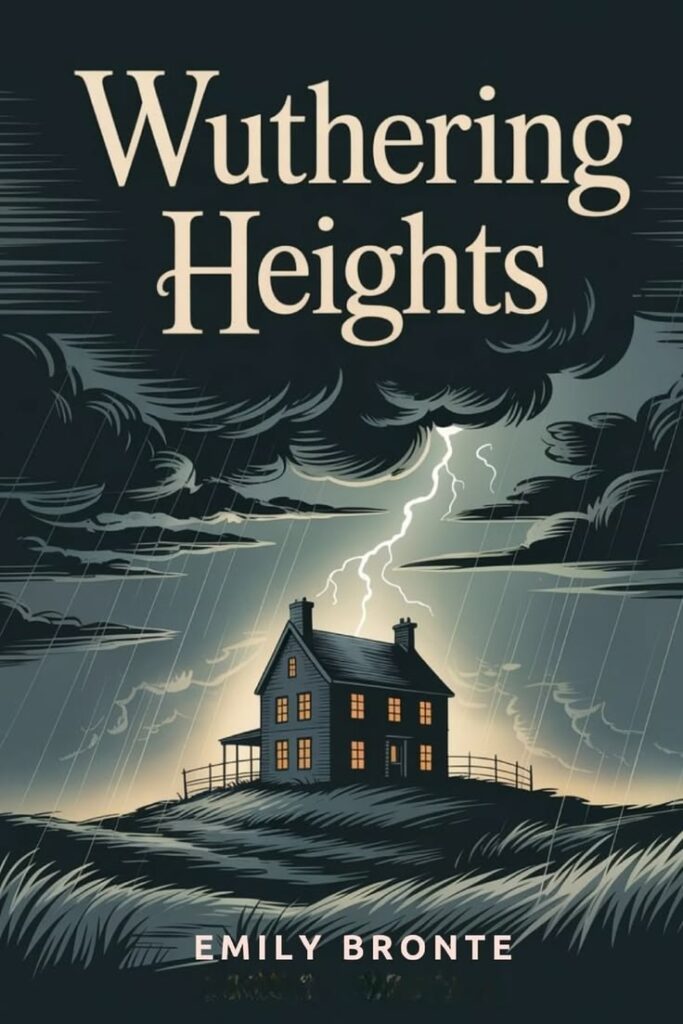
Wuthering Heights Summary
✍️ About the Author: Emily Brontë
Emily Brontë remains one of the most extraordinary figures in English literature despite writing only a single novel during her lifetime. Published in 1847 under the pseudonym Ellis Bell, Wuthering Heights initially shocked Victorian readers with its emotional intensity, morally ambiguous characters, and unconventional storytelling. Unlike the refined romances popular during the period, Brontë created a novel driven by untamed passion, psychological complexity, and the raw forces of nature.
Today, Wuthering Heights is widely regarded as one of the greatest Gothic novels ever written. It is not simply a romance, nor merely a tragedy. It is a profound exploration of love that becomes obsession, grief that transforms into vengeance, and the enduring struggle between civilization and untamed human emotion.
More than 175 years after its publication, the novel continues to fascinate readers because it refuses simple moral judgments. Every character is deeply flawed, every emotion fiercely authentic, and every decision leaves lasting consequences.
🌿 The Wild Moors and a House Filled with Secrets
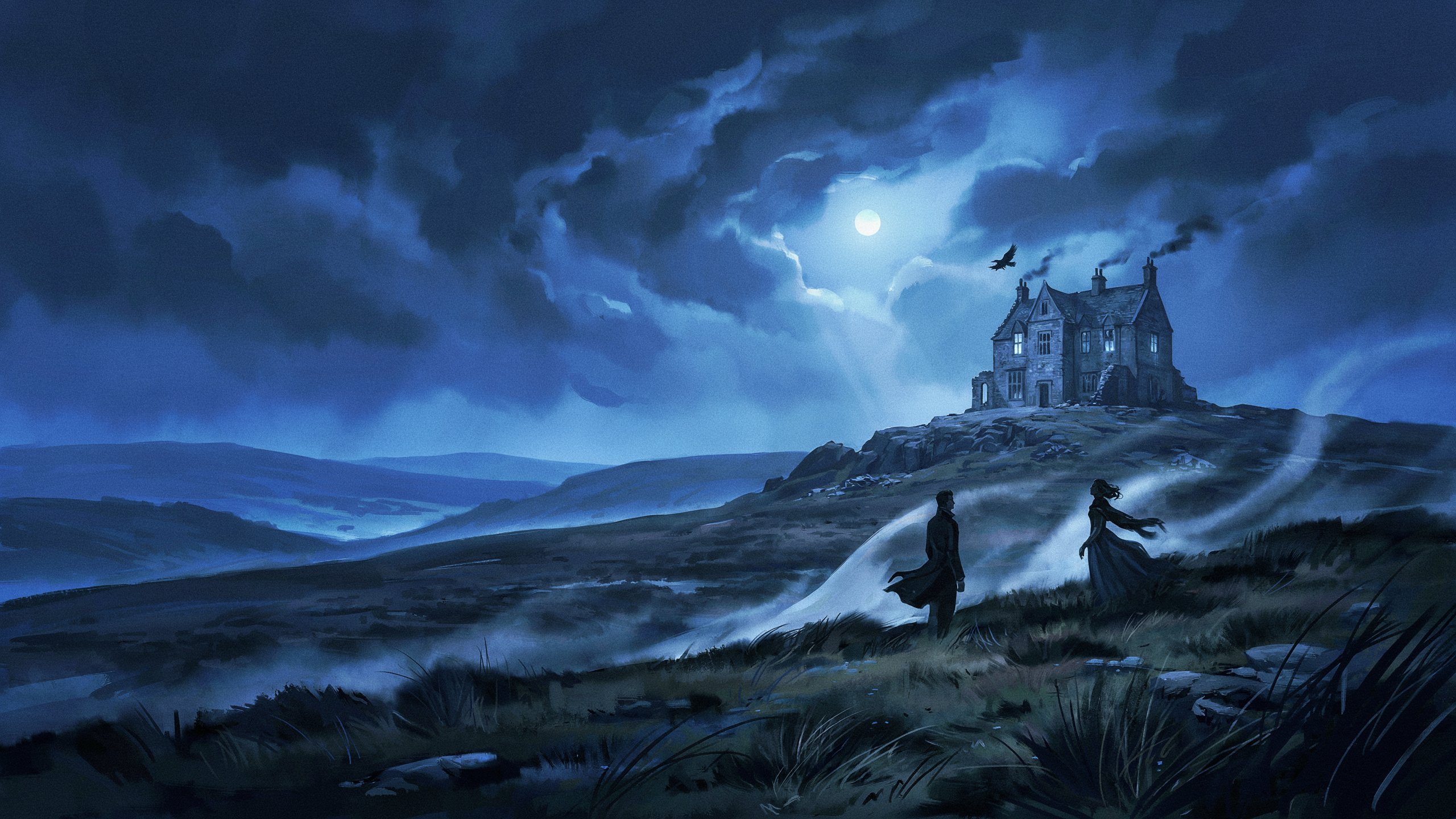
The novel begins when Mr. Lockwood rents Thrushcross Grange and becomes intrigued by its mysterious owner, Heathcliff. During a visit to the isolated estate known as Wuthering Heights, Lockwood encounters an atmosphere unlike anything he has experienced—cold, hostile, and strangely haunted.
“Whatever our souls are made of, his and mine are the same.”
This famous line echoes throughout the novel long before readers fully understand its meaning.
Through the housekeeper Nelly Dean, the story gradually unfolds across generations, revealing decades of love, betrayal, revenge, and suffering hidden beneath the bleak Yorkshire landscape.
The isolated moors surrounding the two houses become more than scenery. They symbolize emotional freedom, wildness, loneliness, and the untamed nature of the human heart.
Brontë transforms the landscape into an emotional mirror, where violent storms reflect inner turmoil and endless horizons represent desires too vast to be contained.
🧠 Catherine Earnshaw and Heathcliff: A Love Beyond Reason
At the center of Wuthering Heights lies one of literature’s most unforgettable relationships.
Heathcliff arrives at Wuthering Heights as an abandoned orphan, adopted by Mr. Earnshaw out of compassion. While many members of the household reject him because of his unknown origins, Catherine Earnshaw forms an immediate and profound connection with him.
Their bond transcends ordinary affection.
It becomes something elemental.
“I am Heathcliff.”
This declaration is perhaps one of the most powerful expressions of identity in literature. Catherine does not simply say she loves Heathcliff. She suggests that their very beings are inseparable.
Emily Brontë portrays love not as comfort or companionship, but as a force of nature—beautiful, destructive, irrational, and impossible to escape.
Their relationship exists beyond social expectations, yet it is precisely society that ultimately drives them apart.
⚡ Pride, Class, and the Choices That Shape Destiny
Although Catherine’s heart belongs to Heathcliff, she chooses to marry Edgar Linton, whose wealth, refinement, and social status promise security and respectability.
Her decision becomes the turning point of the novel.
“It would degrade me to marry Heathcliff now.”
These heartbreaking words reveal how deeply class divisions influence personal choices.
Catherine believes she can preserve both her social position and her emotional bond with Heathcliff.
She underestimates the devastating consequences.
Brontë presents social class not merely as an external barrier but as a force capable of reshaping identities, relationships, and destinies.
The tragedy emerges not because love is absent, but because pride, status, and convention prevent it from flourishing honestly.
🌊 Heathcliff and the Destructive Power of Revenge
Following Catherine’s marriage, Heathcliff disappears for several years before returning unexpectedly—wealthy, mysterious, and transformed.
But he has not returned for reconciliation.
He has returned for revenge.
“Be with me always—take any form—drive me mad!”
After Catherine’s death, Heathcliff’s grief becomes inseparable from his hatred.
Unable to let go of the past, he devotes his life to inflicting suffering upon nearly everyone connected to those he blames.
What makes Heathcliff such a compelling literary figure is his complexity.
He is neither hero nor villain.
He is a man consumed by emotional devastation so profound that it gradually destroys both himself and those around him.
Brontë refuses to excuse his cruelty, yet she allows readers to understand the wounds from which it emerges.
🔥 Obsession Versus Love
One of the novel’s most enduring questions is whether Heathcliff and Catherine’s relationship should even be called love.
Brontë deliberately blurs the distinction between devotion and obsession.
Their connection is undeniably powerful, yet it is also possessive, destructive, and incapable of existing peacefully within ordinary life.
“He’s more myself than I am.”
This extraordinary statement illustrates how completely identity dissolves within their relationship.
Instead of enriching one another, their attachment gradually consumes them.
The novel suggests that love without compassion, forgiveness, or emotional balance can become profoundly destructive.
Passion alone cannot sustain happiness.
Without humility and acceptance, even the deepest affection may evolve into suffering.
🌾 Nature as a Reflection of the Human Soul
Unlike many Victorian novels, Wuthering Heights constantly connects its characters to the natural world.
The windswept moors, violent storms, endless skies, and changing seasons all mirror emotional states.
The landscape feels alive.
It breathes alongside the characters.
“He’s a fierce, pitiless, wolfish man.”
Brontë’s descriptions transform external nature into psychological symbolism.
Wild spaces represent freedom but also danger.
Civilized estates symbolize order but often conceal emotional emptiness.
The novel repeatedly questions whether human beings truly belong within rigid social structures or whether their deepest selves remain forever untamed.
🌸 The Second Generation and the Possibility of Redemption
Although much of Wuthering Heights is dominated by revenge and sorrow, Brontë ultimately introduces hope through the younger generation.
The relationship between young Catherine, Hareton Earnshaw, and the gradual softening of old wounds suggests that cycles of hatred need not continue forever.
Unlike their predecessors, these younger characters learn through patience, forgiveness, and mutual understanding.
“The entire world is a dreadful collection of memoranda that she did exist.”
Memory remains powerful, but it no longer dictates every choice.
Brontë quietly suggests that healing becomes possible only when people choose compassion over vengeance.
This shift transforms the novel’s ending from despair into cautious optimism.
✨ Why This Book Stays With You
Wuthering Heights remains unforgettable because it refuses to fit neatly into any literary category.
It is simultaneously a Gothic mystery, psychological study, tragic romance, family saga, and philosophical meditation on human emotion.
“If all else perished, and he remained, I should still continue to be.”
The novel stays with readers because it explores emotions at their most extreme.
Love, jealousy, grief, revenge, pride, longing, and forgiveness are presented with astonishing honesty.
Brontë reminds us that the strongest emotions can both elevate and destroy, depending upon how they are lived.
Its emotional intensity feels as powerful today as it did nearly two centuries ago.
🎯 Who Should Read This Book
✔️ Readers who enjoy classic Gothic literature and psychological fiction
✔️ Students studying Victorian literature, symbolism, and character development
✔️ Fans of emotionally complex novels exploring love, obsession, and identity
✔️ Readers interested in timeless stories about revenge, redemption, and the human condition
✔️ Anyone seeking one of the most influential and beautifully written classics in English literature
💭 Final Reflection
Wuthering Heights is ultimately a novel about the extraordinary power of human emotion.
Emily Brontë portrays love not as a gentle refuge but as a force capable of transforming identities, destroying lives, and transcending death itself.
Yet beneath its storms, hauntings, and heartbreak lies a quieter truth.
Hatred can be inherited.
So can healing.
“Whatever our souls are made of, his and mine are the same.”
Perhaps that is why Wuthering Heights continues to captivate generations of readers.
It reminds us that love possesses immense power—but without forgiveness, wisdom, and compassion, that same power can become the very thing that consumes us.
The novel endures because it captures the deepest contradictions of the human heart: our longing to love completely, our struggle to let go, and our enduring hope that even after profound suffering, redemption remains possible.
Disclosure: This article contains affiliate links.
Explore more book summaries on Reading Axis. Book Summaries
Read the summary of Atomic Habits – Transform your life in 4 Laws https://thereadingaxis.com/atomic-habits-summary-4-powerful-laws-to-build-good-habits-and-break-bad-ones/
Read the summary of Psychology of Money – Timeless lessons https://thereadingaxis.com/psychology-of-money-summary/
Read the summary of Deep Work https://thereadingaxis.com/deep-work-book-summary/
Read the summary of 48 Laws of Power https://thereadingaxis.com/48-laws-of-power-summary-robert-greene/
Read the summary of Rich Dad Poor Dad https://thereadingaxis.com/rich-dad-poor-dad-summary/
Read the summary of Dopamine Detox https://thereadingaxis.com/dopamine-detox-book-summary/
Read the summary of The Alchemist https://thereadingaxis.com/the-alchemist-summary-personal-legend/
Read the summary of Can’t hurt me https://thereadingaxis.com/cant-hurt-me-summary-david-goggins/