

Flow summary
✍️ About the Author: Mihaly Csikszentmihalyi
Mihaly Csikszentmihalyi, one of the most influential psychologists in the field of positive psychology, devoted his life to understanding a deceptively simple question: What truly makes people happy? Rather than focusing only on pleasure or external success, he explored moments when individuals felt completely alive, deeply focused, and fully immersed in what they were doing. Through decades of research, he discovered a mental state so powerful that it transformed not only performance, but the entire experience of living. He called this state “flow.”
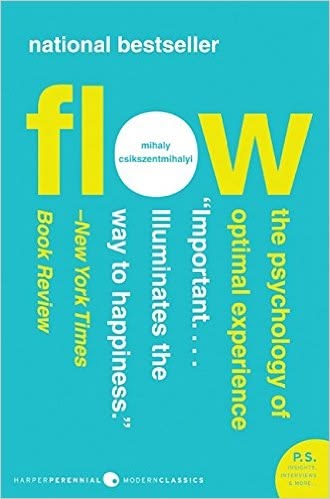
In Flow: The Psychology of Optimal Experience, Csikszentmihalyi argues that genuine fulfillment does not come from passive comfort or endless consumption. Instead, happiness emerges when attention, skill, and purpose align completely in the present moment.
🌿 The Search for Happiness Beyond Pleasure
One of the book’s most profound insights is its distinction between pleasure and fulfillment. Modern life often encourages people to chase temporary satisfaction—money, entertainment, status, or distraction—believing these things will create happiness. Yet even after achieving external success, many individuals continue to feel restless or empty.
Csikszentmihalyi suggests that true satisfaction comes from a completely different source: deep engagement.
“The best moments in our lives are not the passive, receptive, relaxing times.”
The moments people remember most vividly are often those requiring intense concentration, challenge, creativity, or effort—moments when they became so absorbed in an activity that awareness of time and self temporarily disappeared.
This immersive state is what the book defines as flow.
🧠 What Is Flow?
Flow is the psychological state where attention becomes completely focused on a meaningful task. During flow, distractions fade, self-consciousness disappears, and action feels almost effortless despite the difficulty of the activity itself.
“Flow is the state in which people are so involved in an activity that nothing else seems to matter.”
This state can occur in almost any field—art, sports, music, writing, business, studying, or even conversation. What matters is not the activity itself, but the depth of concentration and engagement involved.
One of the most striking aspects of flow is that happiness emerges as a byproduct rather than a direct goal. People often become happiest when they stop chasing happiness and instead become fully absorbed in meaningful work.
⚡ The Balance Between Challenge and Skill
A central principle of flow is the balance between challenge and ability. When tasks are too easy, boredom appears. When tasks are overwhelmingly difficult, anxiety takes over. Flow exists in the delicate space between the two—where challenges stretch ability without completely overwhelming it.
“Control of consciousness determines the quality of life.”
This idea changes how growth is understood. Fulfillment is not found through comfort alone, but through voluntary engagement with meaningful difficulty.
People enter flow most easily when they are pushed slightly beyond their current limits, requiring full concentration and active participation.
🔥 Attention: The Most Valuable Resource
Throughout the book, Csikszentmihalyi repeatedly emphasizes the importance of attention. What we focus on ultimately shapes our experience of reality itself.
Modern life constantly competes for attention through distractions, noise, and fragmented stimulation. But the book argues that scattered attention weakens both happiness and performance.
“The mark of a person who is in control of consciousness is the ability to focus attention at will.”
This makes focus not merely a productivity skill, but a psychological foundation for fulfillment.
Flow becomes possible only when attention is intentionally directed rather than endlessly divided.
🌊 The Loss of Self and the Expansion of Experience
One of the most fascinating aspects of flow is the temporary disappearance of self-consciousness. During deep immersion, people stop obsessing over appearance, judgment, insecurity, or external pressure. The boundary between action and awareness begins to dissolve.
This creates a rare sense of freedom.
Time often feels distorted during flow. Hours pass like minutes, or moments feel unusually vivid and expansive.
“When experience is intrinsically rewarding, life is justified in the present.”
This sentence captures the emotional core of the book. Flow transforms life from something constantly postponed into something fully lived in the moment itself.
🛡️ Meaning Is Created Through Engagement
Csikszentmihalyi argues that meaning is not something discovered passively. It is built through intentional engagement with worthwhile challenges.
This perspective is deeply empowering because it places fulfillment within everyday life rather than distant achievement. Purpose does not always arrive dramatically. Often, it develops gradually through repeated moments of concentration, mastery, and contribution.
The book therefore shifts happiness away from external circumstances and toward internal experience.
💡 Creativity, Mastery, and the Joy of Progress
Another powerful theme in Flow is the connection between growth and fulfillment. Human beings feel most alive when they are developing skills, overcoming meaningful obstacles, and experiencing progress.
“It is by being fully involved with every detail of our lives that we find happiness.”
This explains why deeply engaged individuals often feel energized rather than exhausted by difficult work. Challenge becomes rewarding because it creates movement, expansion, and mastery.
Flow transforms effort itself into satisfaction.
✨ Why This Book Stays With You
Flow remains impactful because it completely reframes happiness. Instead of presenting fulfillment as something purchased, achieved externally, or dependent on ideal circumstances, the book reveals that some of life’s deepest satisfaction comes from focused presence and meaningful engagement.
“Happiness does not happen. It is not the result of good fortune or random chance.”
The book stays with readers because it changes how ordinary moments are perceived. Work, creativity, learning, relationships, and even simple daily activities suddenly become opportunities for immersion and meaning.
And in a distracted world, that insight feels increasingly rare.
🎯 Who Should Read This Book
✔️ Readers interested in psychology, happiness, and mindfulness
✔️ Creatives, students, and professionals seeking deep focus and peak performance
✔️ Anyone struggling with distraction, boredom, or lack of fulfillment
✔️ People exploring meaningful productivity and intentional living
💭 Final Reflection
Flow is ultimately a book about reclaiming attention and rediscovering the richness hidden within full engagement. Mihaly Csikszentmihalyi reminds us that fulfillment is rarely found in passive consumption or endless comfort. It emerges when we commit ourselves fully to meaningful experiences that challenge, absorb, and transform us.
Disclosure: This article contains affiliate links.
Explore more book summaries on Reading Axis. Book Summaries
Read the summary of Atomic Habits – Transform your life in 4 Laws https://thereadingaxis.com/atomic-habits-summary-4-powerful-laws-to-build-good-habits-and-break-bad-ones/
Read the summary of Psychology of Money – Timeless lessons https://thereadingaxis.com/psychology-of-money-summary/
Read the summary of Deep Work https://thereadingaxis.com/deep-work-book-summary/
Read the summary of 48 Laws of Power https://thereadingaxis.com/48-laws-of-power-summary-robert-greene/
Read the summary of Rich Dad Poor Dad https://thereadingaxis.com/rich-dad-poor-dad-summary/
Read the summary of Dopamine Detox https://thereadingaxis.com/dopamine-detox-book-summary/
Read the summary of The Alchemist https://thereadingaxis.com/the-alchemist-summary-personal-legend/
Read the summary of Can’t hurt me https://thereadingaxis.com/cant-hurt-me-summary-david-goggins/