
To Kill a Mockingbird Summary
✍️ About the Author: Harper Lee
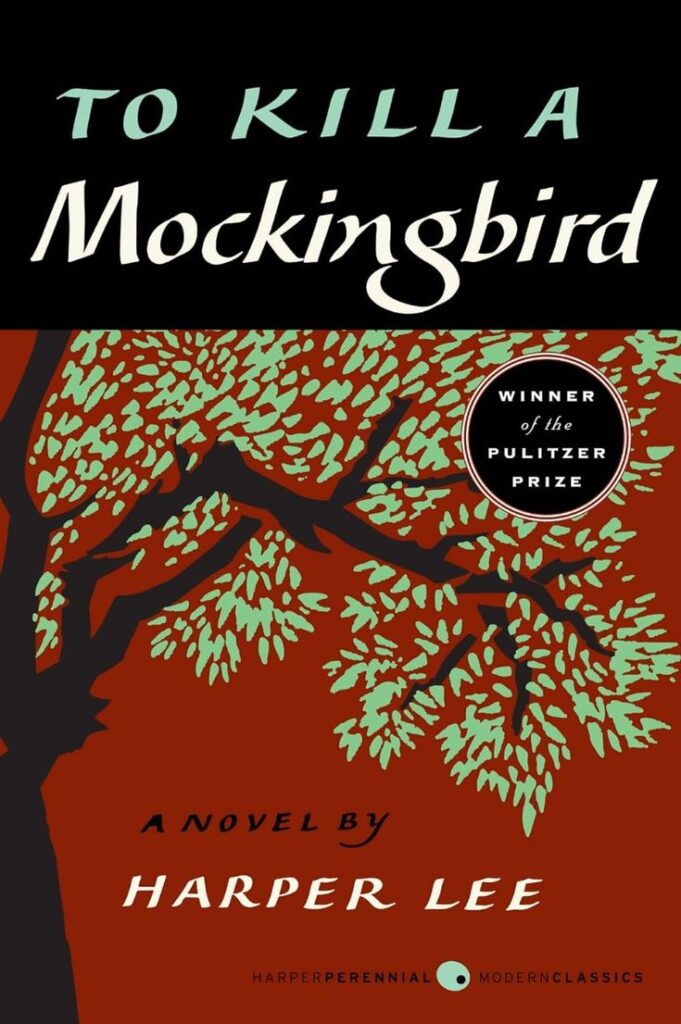
Harper Lee created one of the most influential novels in American literature through To Kill a Mockingbird, a story that explores morality, prejudice, empathy, and justice with remarkable emotional depth. Published in 1960, the novel quickly became timeless because it speaks not only about a specific historical moment, but about the universal struggle between conscience and societal bias.
Through the innocent perspective of a child, Lee examines some of society’s darkest truths while still preserving a quiet belief in compassion and humanity.
🌿 A Childhood Framed by Curiosity and Innocence
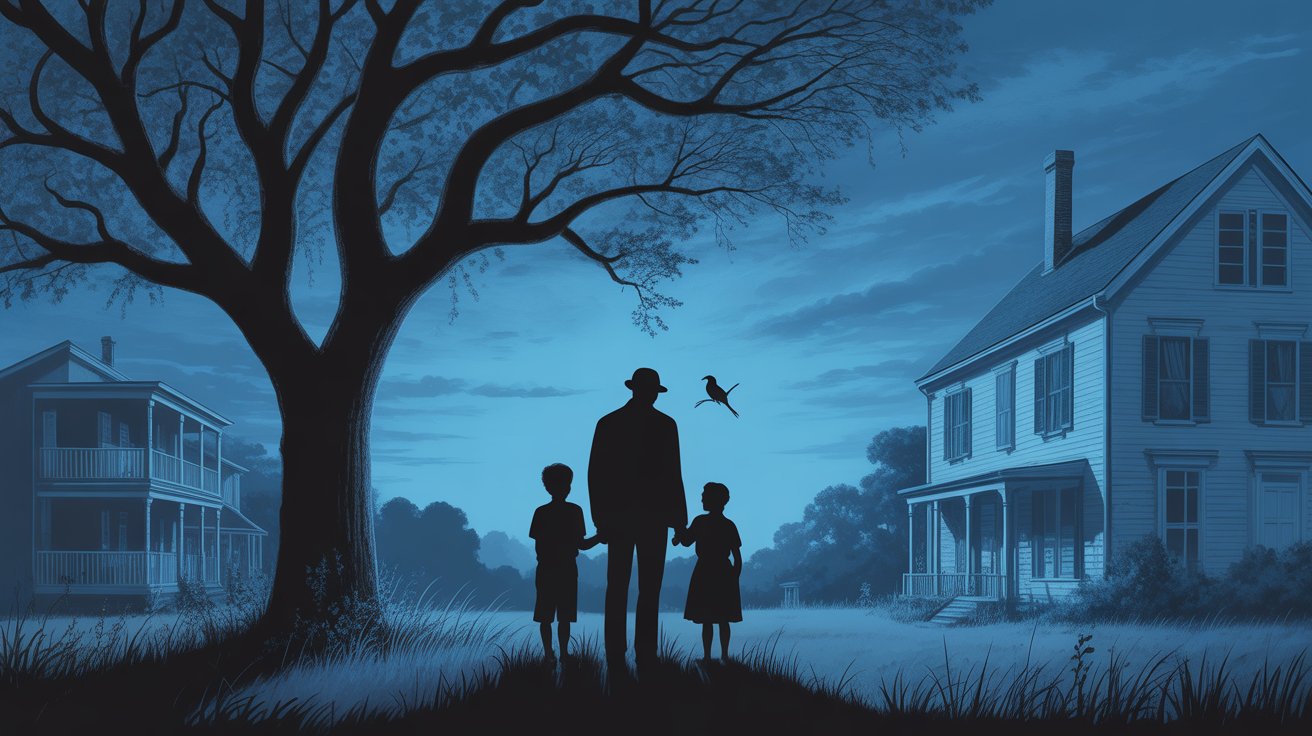
The story unfolds in the small Southern town of Maycomb, Alabama, during the Great Depression, narrated by Scout Finch, a young girl whose childhood is filled with curiosity, imagination, and gradual awakening to the complexities of the adult world.
At first, the novel feels warm and intimate. Scout, her brother Jem, and their friend Dill spend their days fascinated by neighborhood mysteries, especially the reclusive Boo Radley, a man surrounded by rumors and fear.
“Until I feared I would lose it, I never loved to read. One does not love breathing.”
Through Scout’s narration, Harper Lee captures childhood with remarkable authenticity—where innocence exists alongside confusion, and where moral understanding slowly begins to form.
🧠 Atticus Finch and the Quiet Strength of Integrity
At the emotional center of the novel stands Atticus Finch, Scout and Jem’s father, whose calm wisdom and unwavering morality shape the story profoundly. When Atticus agrees to defend Tom Robinson, a Black man falsely accused of assaulting a white woman, he knowingly places himself against the prejudice of the town.
“You never really understand a person until you consider things from his point of view… until you climb into his skin and walk around in it.”
This lesson becomes the moral heartbeat of the novel. Atticus teaches empathy not as an abstract ideal, but as a daily practice of understanding others beyond fear, rumor, or societal judgment.
His courage is quiet rather than dramatic. He does not fight through anger or force, but through dignity and principle.
⚡ Racism, Injustice, and the Failure of Society
As the trial unfolds, the innocence of Scout and Jem begins to fracture. Despite clear evidence pointing toward Tom Robinson’s innocence, the deeply rooted racism of Maycomb outweighs truth and justice.
“The one thing that doesn’t abide by majority rule is a person’s conscience.”
Harper Lee exposes how prejudice can distort morality so completely that fairness becomes impossible within biased systems.
What makes the novel especially powerful is that the injustice feels painfully ordinary. The townspeople are not portrayed as monsters, but as individuals shaped by inherited prejudice and social conformity. This realism makes the story more unsettling because it reveals how deeply discrimination can become normalized.
🌊 Boo Radley and the Danger of Fear-Based Judgment
Parallel to the courtroom drama is the mysterious figure of Boo Radley. Throughout much of the novel, Boo exists more as myth than person—feared and misunderstood by the children because of rumors and imagination.
Yet as the story progresses, Scout gradually realizes that Boo is not frightening at all. He is gentle, isolated, and deeply human.
“Mockingbirds don’t do one thing but make music for us to enjoy.”
The mockingbird becomes the novel’s central symbol of innocence harmed by cruelty. Both Tom Robinson and Boo Radley represent individuals damaged not because they are dangerous, but because society projects fear and prejudice onto them.
🔥 Growing Up Through Moral Awakening
One of the novel’s greatest strengths is its portrayal of moral growth. Scout and Jem slowly begin to understand that the world is not divided neatly into good and bad people. Instead, it is filled with contradiction, complexity, and flawed humanity.
Their loss of innocence is gradual and painful, yet necessary.
“People generally see what they look for, and hear what they listen for.”
Harper Lee shows how bias shapes perception itself. The challenge is not merely to see, but to see clearly beyond assumption and fear.
🛡️ Compassion as an Act of Courage
Despite the heaviness of its themes, To Kill a Mockingbird is ultimately not a hopeless novel. Beneath its exploration of injustice lies a profound belief in empathy, kindness, and moral courage.
Atticus represents this ideal completely—not perfection, but the refusal to surrender integrity even when defeat feels inevitable.
“Real courage is when you know you’re licked before you begin, but you begin anyway.”
This form of courage becomes the novel’s deepest message: true strength lies not in victory, but in standing for what is right regardless of outcome.
✨ Why This Book Stays With You
To Kill a Mockingbird remains enduring because it speaks simultaneously to the heart and conscience. It captures the beauty of childhood while confronting the painful realities of racism, injustice, and societal hypocrisy.
“I think there’s just one kind of folks. Folks.”
The novel stays with readers because it asks timeless questions: How do we judge others? What does justice truly mean? And how do we remain compassionate in a flawed world?
Its emotional power lies in its humanity.
🎯 Who Should Read This Book
✔️ Readers interested in classic literature and social justice themes
✔️ Students exploring morality, racism, and empathy in fiction
✔️ Anyone seeking emotionally rich coming-of-age stories
✔️ Readers who appreciate thoughtful novels about human nature and integrity
💭 Final Reflection
To Kill a Mockingbird is more than a courtroom drama or literary classic—it is a meditation on conscience itself. Harper Lee reminds us that empathy requires imagination, justice requires courage, and innocence deserves protection in a world too often shaped by prejudice.
“Before I can live with other folks I’ve got to live with myself.”
And perhaps that is the novel’s deepest truth: morality begins quietly, within the choices individuals make when society pressures them to look away.
Disclosure: This article contains affiliate links.
Explore more book summaries on Reading Axis. Book Summaries
Read the summary of Rich Dad Poor Dad https://thereadingaxis.com/rich-dad-poor-dad-summary/
Read the summary of Dopamine Detox https://thereadingaxis.com/dopamine-detox-book-summary/
Read the summary of The Alchemist https://thereadingaxis.com/the-alchemist-summary-personal-legend/
Read the summary of The Kite Runner https://thereadingaxis.com/the-kite-runner-book-summary/
Read the summary of The Vegetarian – Han Kang https://thereadingaxis.com/the-vegetarian-by-han-kang-summary/
Read A Thousand Splendid Suns – Khaled Hosseini https://thereadingaxis.com/a-thousand-splendid-suns-summary/
Read Think and Grow Rich – Napoleon Hill https://thereadingaxis.com/think-and-grow-rich-summary-laws-of-success/
Read Ego is the Enemy – Ryan Holiday https://thereadingaxis.com/ego-is-the-enemy-summary-lessons/