Animal Farm Summary
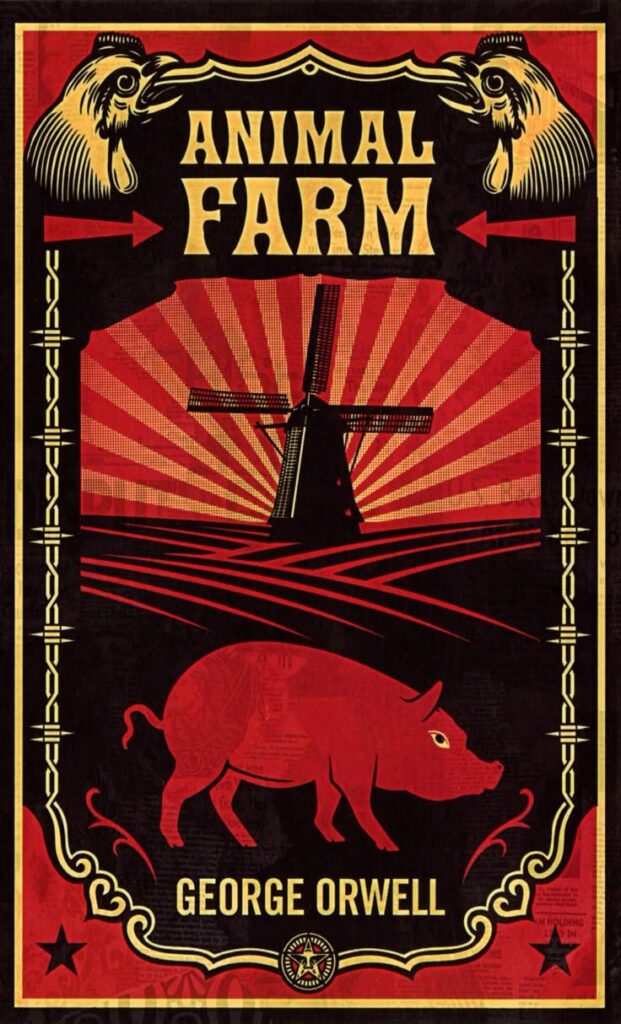
✍️ About the Author: George Orwell
George Orwell remains one of literature’s most fearless political voices, known for exposing the hidden mechanics of power, manipulation, and authoritarian control. Through works such as 1984 and Animal Farm, Orwell transformed political criticism into unforgettable storytelling. What makes his writing enduring is not merely its historical relevance, but its unsettling ability to remain timeless. Animal Farm, though written as a short allegorical novel, carries extraordinary depth beneath its deceptively simple surface.
🌑 The Dream of Equality Begins
Animal Farm begins with hope. On Manor Farm, the animals live under the harsh rule of Mr. Jones, a neglectful and exploitative farmer who symbolizes oppressive leadership. Tired of suffering, the animals are inspired by Old Major, an elderly pig whose vision of equality ignites the idea of rebellion.
“All animals are equal.”
This phrase becomes the moral foundation of the revolution—a promise of fairness, dignity, and collective freedom. Orwell initially presents the rebellion as deeply idealistic, reflecting humanity’s recurring desire to create a better and more equal society.
The overthrow of Mr. Jones feels triumphant. For a brief moment, the farm represents possibility itself.
🧠 Power Slowly Changes Its Shape
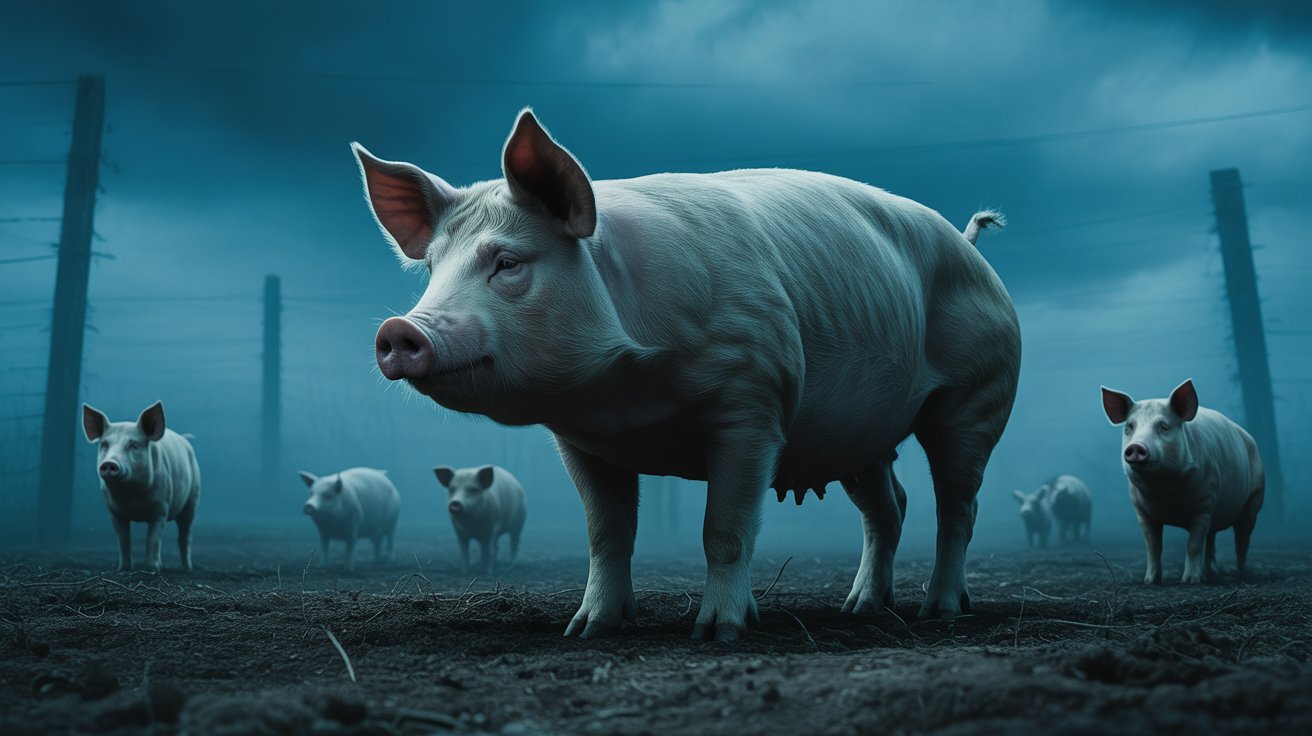
After the revolution, leadership gradually falls into the hands of the pigs, particularly Napoleon and Snowball. While Snowball represents vision and progress, Napoleon embodies ambition and control. What begins as collective leadership slowly transforms into hierarchy.
Orwell’s brilliance lies in how subtly this corruption unfolds. There is no immediate tyranny. Instead, power changes gradually, almost invisibly, until the original ideals become distorted beyond recognition.
“All animals are equal, but some animals are more equal than others.”
This iconic line captures the entire tragedy of the novel. Equality, once revolutionary, becomes manipulated language used to justify inequality itself.
⚡ Propaganda and the Manipulation of Truth
One of the most chilling aspects of Animal Farm is the role of propaganda. Through the pig Squealer, Orwell demonstrates how language can reshape reality. Facts are altered, failures are denied, and history is rewritten so consistently that the animals begin to doubt their own memories.
“The creatures outside looked from pig to man, and from man to pig… but already it was impossible to say which was which.”
The pigs maintain control not only through force, but through confusion. When truth becomes unstable, resistance weakens.
Orwell shows that authoritarianism thrives not merely through violence, but through the manipulation of perception.
🌊 Boxer and the Tragedy of Blind Loyalty
Among the animals, Boxer the horse stands as one of the novel’s most heartbreaking figures. Loyal, hardworking, and deeply sincere, Boxer believes entirely in the revolution and its leaders.
“I will work harder.”
This phrase becomes both admirable and tragic. Boxer represents the working class—the people whose labor sustains systems, yet who are often the first to be exploited by them.
Even as conditions worsen, Boxer continues believing that sacrifice will eventually lead to improvement. Orwell uses his character to reveal the danger of obedience without critical thought.
🔥 Fear, Control, and the Collapse of Freedom
As Napoleon’s authority strengthens, fear replaces solidarity. Public executions, intimidation, and surveillance become tools of control. The animals who once dreamed of liberation now live under a regime more oppressive than the one they overthrew.
What makes this transformation disturbing is its familiarity. Orwell suggests that revolutions often fail not because ideals are wrong, but because power itself has a tendency to corrupt those who hold it.
“Surely, comrades, you do not want Jones back?”
Fear becomes the ultimate weapon. The threat of returning to past suffering is used to justify present oppression.
🛡️ The Cyclical Nature of Power
By the end of the novel, the pigs have become indistinguishable from the humans they once condemned. The revolution does not abolish hierarchy—it merely changes who sits at the top.
This ending is not simply pessimistic; it is cautionary. Orwell warns that without accountability, transparency, and critical awareness, systems built on freedom can gradually evolve into systems of domination.
✨ Why This Book Stays With You
Animal Farm remains powerful because it operates on multiple levels simultaneously. On the surface, it is a simple story about animals on a farm. Beneath that simplicity lies a profound exploration of politics, psychology, propaganda, and human nature.
“Man serves the interests of no creature except himself.”
The novel stays with readers because it reveals how easily noble ideals can be manipulated once power becomes concentrated.
Its lessons extend far beyond its historical inspiration. It speaks to any society where truth is distorted, authority becomes unquestioned, and people slowly surrender their ability to challenge those in control.
🎯 Who Should Read This Book
✔️ Readers interested in political fiction and social commentary
✔️ Students exploring power, propaganda, and revolution
✔️ Fans of classic literature and dystopian themes
✔️ Anyone seeking thought-provoking books about human nature and leadership
💭 Final Reflection
Animal Farm is not simply a critique of one political system—it is a timeless warning about the fragility of freedom itself. Orwell reminds us that power does not always announce itself violently. Often, it arrives gradually, hidden behind promises, slogans, and manipulated truths.
“The only good human being is a dead one.”
What begins as hope can slowly become oppression when people stop questioning authority and allow fear to replace awareness.
And perhaps that is why Animal Farm continues to endure—not because it describes the past, but because it continues to reflect patterns that repeatedly emerge in the present.
Disclosure: This article contains affiliate links.
Explore more book summaries on Reading Axis. Book Summaries
Read the summary of Rich Dad Poor Dad https://thereadingaxis.com/rich-dad-poor-dad-summary/
Read the summary of Dopamine Detox https://thereadingaxis.com/dopamine-detox-book-summary/
Read the summary of The Alchemist https://thereadingaxis.com/the-alchemist-summary-personal-legend/
Read the summary of The Kite Runner https://thereadingaxis.com/the-kite-runner-book-summary/
Read the summary of The Vegetarian – Han Kang https://thereadingaxis.com/the-vegetarian-by-han-kang-summary/
Read A Thousand Splendid Suns – Khaled Hosseini https://thereadingaxis.com/a-thousand-splendid-suns-summary/
Read Think and Grow Rich – Napoleon Hill https://thereadingaxis.com/think-and-grow-rich-summary-laws-of-success/
Read Ego is the Enemy – Ryan Holiday https://thereadingaxis.com/ego-is-the-enemy-summary-lessons/