


Leaders Eat Last summary
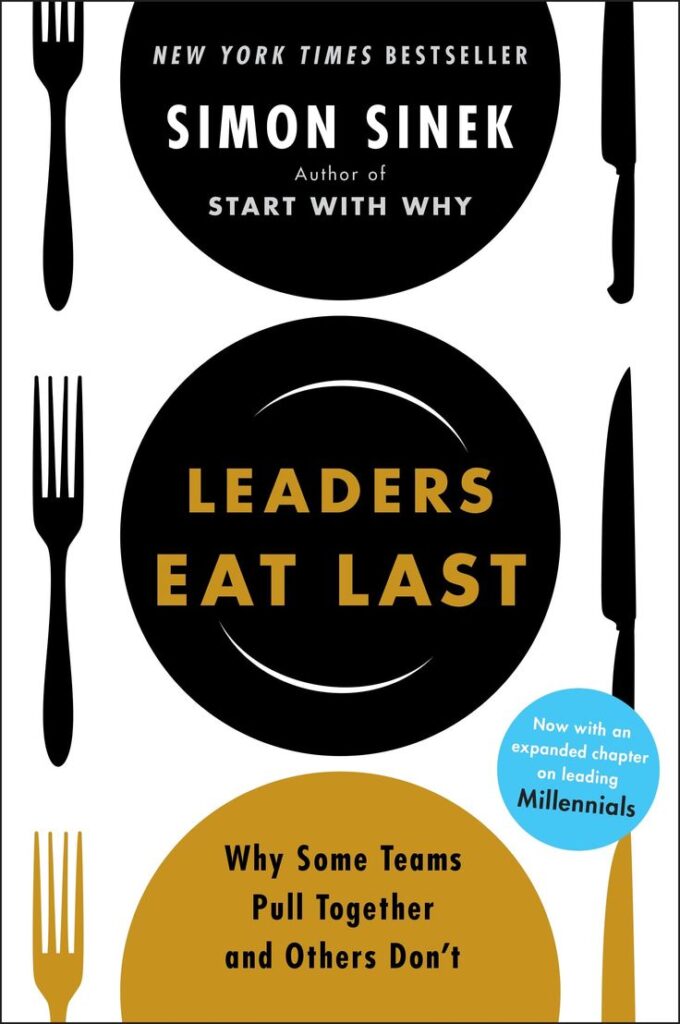
✍️ About the Author: Simon Sinek
Simon Sinek is widely recognized for redefining leadership through a deeply human lens. His work explores not just how organizations succeed, but why some leaders inspire lasting loyalty while others struggle to build trust. In Leaders Eat Last, Sinek moves beyond strategy and performance, focusing instead on the biological, emotional, and cultural foundations that shape truly effective leadership.
🌿 Leadership as Responsibility, Not Authority
At the heart of Leaders Eat Last lies a powerful inversion of traditional leadership thinking: leadership is not about being in charge—it is about taking care of those in your charge. The title itself draws from a military tradition, where leaders ensure their team is fed and safe before attending to themselves. This simple act reflects a deeper truth—great leadership is built on service, not status.
“Leaders are the ones who are willing to give up something of their own for us.”
This shift from authority to responsibility transforms the role of a leader. It is no longer about control, but about protection, guidance, and trust.
🧠 The Circle of Safety: Where Trust Begins
Sinek introduces one of the most defining concepts in the book—the Circle of Safety. Within this circle, individuals feel secure, valued, and protected from internal threats such as politics, fear, and competition. When people feel safe, they naturally collaborate, innovate, and perform at their best.
Outside the circle, however, energy is wasted on self-preservation rather than contribution. Fear replaces trust, and short-term thinking replaces meaningful progress.
“When people feel safe and protected by the leadership in the organization, the natural reaction is to trust and cooperate.”
The role of a leader, then, is to expand and protect this circle, ensuring that people can focus on collective success rather than individual survival.
🔬 The Biology of Leadership: Why It Matters
What makes Leaders Eat Last uniquely compelling is its integration of biology into leadership. Sinek explains how human behavior is influenced by chemicals such as dopamine, serotonin, oxytocin, and cortisol. These are not abstract ideas—they directly shape how teams function.
- Dopamine drives achievement but can lead to short-term thinking
- Cortisol creates stress and fear
- Serotonin and oxytocin build trust, connection, and loyalty
Organizations that prioritize numbers over people often trigger stress-driven environments, while those that prioritize human connection foster long-term success.
“Leadership is not about being in charge. Leadership is about taking care of those in your charge.”
This biological perspective reinforces a simple truth: leadership is fundamentally human.
🌊 The Danger of Short-Term Thinking
Sinek critiques modern organizational cultures that prioritize quick wins over lasting impact. When leaders focus solely on metrics, profits, and external validation, they unintentionally create environments of pressure and insecurity.
In such cultures, employees may perform—but they rarely thrive.
True leadership, in contrast, balances results with responsibility, ensuring that success does not come at the cost of people.
⚡ Empathy as a Leadership Strength
A recurring theme throughout the book is empathy—not as a soft skill, but as a strategic advantage. Leaders who understand their people, who listen, who support, and who genuinely care, create teams that are resilient and committed.
“A team is not a group of people who work together. A team is a group of people who trust each other.”
Trust cannot be demanded; it must be built, consistently and authentically.
🛡️ Sacrifice and the True Test of Leadership
Leadership is most visible in difficult moments. It is easy to lead when things are going well, but true leadership reveals itself in times of uncertainty and pressure. Great leaders absorb stress, make tough decisions, and protect their teams—even at personal cost.
This willingness to sacrifice creates loyalty that cannot be replicated through incentives or authority.
✨ Why This Book Stays With You
Leaders Eat Last leaves a lasting impression because it shifts leadership from a role to a responsibility. It reframes success as something collective, built on trust, safety, and shared purpose. It challenges you to not just lead better—but to care more deeply.
“The responsibility of leadership is not to come up with all the ideas but to create an environment in which great ideas can happen.”
🎯 Who Should Read This Book
✔️ Leaders and managers aiming to build strong, loyal teams
✔️ Entrepreneurs creating purpose-driven organizations
✔️ Professionals interested in workplace culture and psychology
✔️ Anyone who wants to lead with empathy, trust, and long-term impact
💭 Final Reflection
Leaders Eat Last is not simply about leadership—it is about humanity within leadership. It reminds us that organizations are not built on strategies alone, but on people. And when people feel safe, valued, and supported, they do more than perform—they commit.
“Leadership requires two things: a vision of the world that does not yet exist and the ability to communicate it.”
And in creating that vision while protecting those who bring it to life, true leadership quietly, powerfully emerges.
Disclosure: This article contains affiliate links.
Explore more book summaries on Reading Axis. Book Summaries
Read the summary of Atomic Habits – Transform your life in 4 Laws https://thereadingaxis.com/atomic-habits-summary-4-powerful-laws-to-build-good-habits-and-break-bad-ones/
Read the summary of Psychology of Money – Timeless lessons https://thereadingaxis.com/psychology-of-money-summary/
Read the summary of Deep Work https://thereadingaxis.com/deep-work-book-summary/
Read the summary of 48 Laws of Power https://thereadingaxis.com/48-laws-of-power-summary-robert-greene/
Read the summary of Rich Dad Poor Dad https://thereadingaxis.com/rich-dad-poor-dad-summary/
Read the summary of Dopamine Detox https://thereadingaxis.com/dopamine-detox-book-summary/
Read the summary of The Alchemist https://thereadingaxis.com/the-alchemist-summary-personal-legend/