
The Midnight Library summary
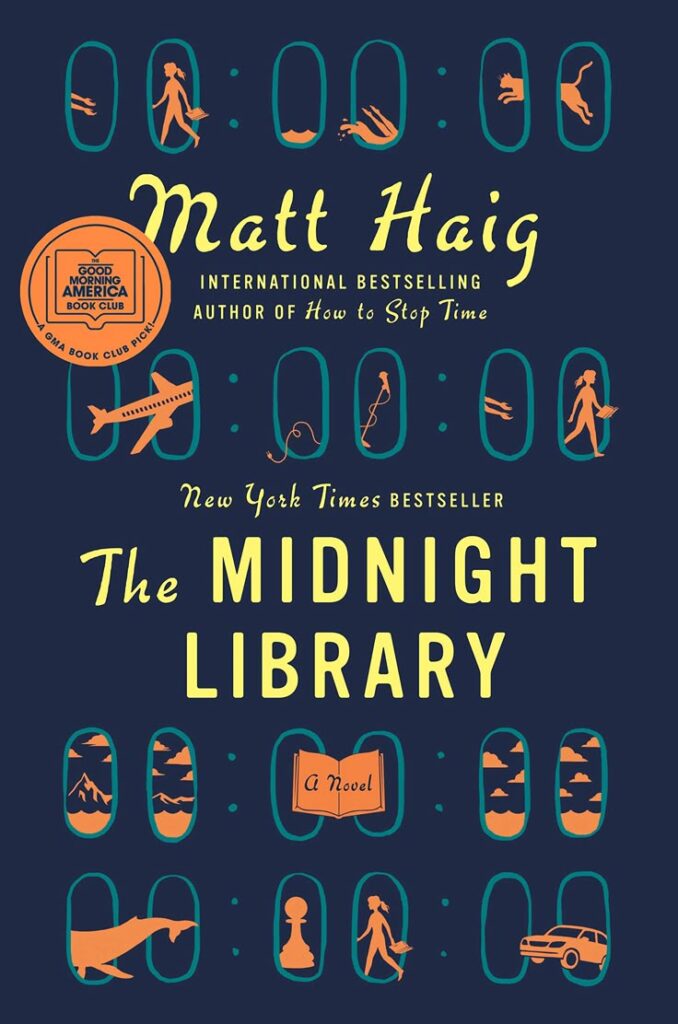
✍️ About the Author: Matt Haig
Matt Haig has become one of the most influential contemporary authors exploring mental health, emotional resilience, and the search for meaning. Known for blending philosophy with accessible storytelling, Haig writes about anxiety, depression, hope, and the quiet complexities of ordinary life with remarkable honesty. His novels resonate because they never pretend life is simple. Instead, they acknowledge uncertainty while gently reminding readers that hope often exists even when it feels invisible.
Published in 2020, The Midnight Library quickly became an international bestseller because it asks a question that almost everyone has wondered at some point:
What if you had made different choices?
What if you had accepted another job, pursued another dream, chosen another relationship, or walked down a completely different path?
Rather than treating these questions as mere fantasy, Haig transforms them into a deeply moving exploration of regret, possibility, and self-acceptance. The result is a novel that is both philosophical and profoundly emotional—a story that encourages readers not to mourn the lives they never lived but to appreciate the one that still belongs to them.
🌌 A Library Between Life and Death
The story begins with Nora Seed, a woman overwhelmed by disappointment, loneliness, and the painful belief that her life has amounted to failure. Relationships have ended, dreams have dissolved, careers have collapsed, and every decision seems to carry the weight of irreversible regret.
When Nora reaches her emotional breaking point, she unexpectedly awakens in an extraordinary place known as the Midnight Library.
“Between life and death there is a library.”
This library exists outside ordinary time. Every book on its endless shelves contains a different version of Nora’s life—a reality created by a different decision she could have made.
One book reveals the life where she became an Olympic swimmer.
Another imagines her as a famous musician.
Others explore careers she abandoned, relationships she never pursued, cities she never moved to, and dreams she left unfinished.
The library becomes more than a magical setting.
It becomes a metaphor for human possibility itself.
Each unopened book represents the countless versions of ourselves that exist only in imagination.
🧠 The Weight of Regret
At the emotional center of the novel lies the concept of regret.
Few emotions possess greater power over human happiness.
People often replay conversations, relationships, opportunities, and decisions, wondering whether life might have been better had they chosen differently.
Haig captures this universal experience with remarkable sensitivity.
“Never underestimate the big importance of small things.”
Nora initially believes every regret points toward a better life she somehow missed.
She imagines success existing elsewhere—in another city, another career, another relationship, another version of herself.
The Midnight Library allows her to test these assumptions.
What she gradually discovers is that regret often simplifies reality.
The lives we imagine are usually more perfect than the lives that could ever truly exist.
Every path contains beauty.
Every path contains pain.
There is no existence completely free from disappointment.
🌊 The Infinite Versions of Ourselves
One of the novel’s most fascinating ideas is that identity is not fixed.
Every decision creates new possibilities.
Different environments shape different personalities.
Relationships influence different futures.
Success takes countless forms.
“You don’t have to understand life. You just have to live it.”
As Nora experiences alternative versions of herself, she realizes that changing external circumstances does not automatically eliminate internal struggles.
The successful athlete still faces loneliness.
The famous musician still carries uncertainty.
The accomplished scientist still experiences loss.
Every life contains complexity.
Haig gently dismantles the illusion that happiness exists somewhere else, waiting behind one perfect decision.
Instead, fulfillment emerges from how individuals engage with whatever life they are living.
❤️ The Quiet Beauty of Ordinary Life
Perhaps the novel’s greatest achievement is its celebration of ordinary existence.
Modern society often teaches people to pursue extraordinary success, believing that happiness lies in fame, wealth, achievement, or constant excitement.
The Midnight Library quietly challenges this belief.
“The only way to learn is to live.”
Nora gradually discovers that seemingly insignificant moments often possess extraordinary meaning.
A conversation.
A friendship.
A shared meal.
A walk beneath the stars.
Acts of kindness.
Simple mornings.
These moments rarely appear dramatic, yet together they create a meaningful life.
Haig reminds readers that fulfillment is not always found through remarkable accomplishments.
Sometimes it exists quietly within everyday experiences that people overlook while chasing something bigger.
🌱 Mental Health, Compassion, and the Possibility of Hope
Although The Midnight Library explores depression and despair, it ultimately becomes a profoundly hopeful novel.
Haig never minimizes emotional suffering.
Instead, he approaches it with honesty and compassion.
Nora’s journey illustrates that hopelessness often narrows perspective.
Pain convinces people that the future contains no possibilities.
The Midnight Library gradually expands that perspective again.
“Hope, in this case, was not a guarantee. It was a possibility.”
This distinction makes the novel especially powerful.
Hope does not require certainty.
It requires openness.
The book encourages readers to recognize that difficult moments represent chapters rather than conclusions.
Life continues changing.
So do people.
🔥 Perfection Is an Impossible Destination
As Nora explores increasingly different lives, one truth becomes impossible to ignore.
There is no perfect existence.
Every life contains sacrifices.
Every decision closes certain doors while opening others.
Every path includes joy and grief intertwined.
“It is easy to mourn the lives we aren’t living.”
This realization transforms Nora’s understanding of herself.
She stops searching for perfection.
She begins searching for presence.
The novel suggests that much of human dissatisfaction arises from comparing reality with imagined alternatives that never truly existed.
Freedom begins when individuals stop asking whether another life would have been better and instead ask how they can fully inhabit the one unfolding before them.
🌸 Self-Acceptance as the Greatest Adventure
One of the most moving aspects of The Midnight Library is Nora’s evolving relationship with herself.
Initially, she views herself almost entirely through failure.
Gradually, she begins recognizing qualities that existed all along—kindness, curiosity, resilience, empathy, and quiet courage.
The greatest transformation occurs not because her circumstances become perfect.
It happens because her perspective changes.
“Sometimes the only way to learn is to live.”
Self-acceptance emerges not through achievement but through understanding.
Nora learns that worthiness has never depended upon perfection.
It has always existed.
She simply needed to see it.
✨ Why This Book Stays With You
The Midnight Library resonates because nearly every reader recognizes some part of Nora’s struggle.
Almost everyone wonders about roads not taken.
Relationships that ended.
Dreams abandoned.
Mistakes regretted.
Lives imagined.
“Never underestimate the big importance of small things.”
The novel reminds us that imagination can be both beautiful and deceptive.
While it allows people to dream, it can also convince them that fulfillment always exists somewhere else.
Haig gently redirects attention toward the extraordinary richness hidden within ordinary life.
Readers finish the novel not necessarily with answers, but with renewed appreciation for the present.
🎯 Who Should Read This Book
✔️ Readers interested in philosophical and contemporary fiction
✔️ Anyone reflecting on life choices, regret, and second chances
✔️ Readers exploring themes of mental health, hope, and resilience
✔️ Fans of emotionally uplifting novels with meaningful life lessons
✔️ Those who enjoyed The Alchemist, Man’s Search for Meaning, The Power of Now, or Eleanor Oliphant Is Completely Fine
✔️ Anyone seeking a comforting novel about purpose, possibility, and self-discovery
💭 Final Reflection
The Midnight Library is ultimately a novel about perspective.
Matt Haig reminds us that while life will always include uncertainty, disappointment, and unrealized possibilities, it also contains countless quiet moments worthy of gratitude.
The perfect life does not exist.
Only the lived one.
And perhaps that is enough.
“The point is not what you look at. The point is what you see.”
That sentence quietly captures the soul of the novel.
The circumstances of life matter.
But the meaning we create from those circumstances matters even more.
In the end, The Midnight Library offers one of literature’s gentlest yet most profound reminders: we cannot rewrite every chapter behind us, but we can still choose how we read—and live—the pages that remain.
Disclosure: This article contains affiliate links.
Explore more book summaries on Reading Axis. Book Summaries
Read the summary of Atomic Habits – Transform your life in 4 Laws https://thereadingaxis.com/atomic-habits-summary-4-powerful-laws-to-build-good-habits-and-break-bad-ones/
Read the summary of Psychology of Money – Timeless lessons https://thereadingaxis.com/psychology-of-money-summary/
Read the summary of Deep Work https://thereadingaxis.com/deep-work-book-summary/
Read the summary of 48 Laws of Power https://thereadingaxis.com/48-laws-of-power-summary-robert-greene/
Read the summary of Rich Dad Poor Dad https://thereadingaxis.com/rich-dad-poor-dad-summary/
Read the summary of Dopamine Detox https://thereadingaxis.com/dopamine-detox-book-summary/
Read the summary of The Alchemist https://thereadingaxis.com/the-alchemist-summary-personal-legend/
Read the summary of Can’t hurt me https://thereadingaxis.com/cant-hurt-me-summary-david-goggins/