

Rich Dad Poor Dad Summary
Most of us grow up hearing the same advice:
“Study hard. Get good grades. Find a secure job.”
But what if that advice — while well-intentioned — is the very reason so many educated people struggle financially?
That’s the uncomfortable question raised in Rich Dad Poor Dad by Robert T. Kiyosaki — a book that has changed the way millions think about money.
This is not just a personal finance book.
It is a mindset shift.
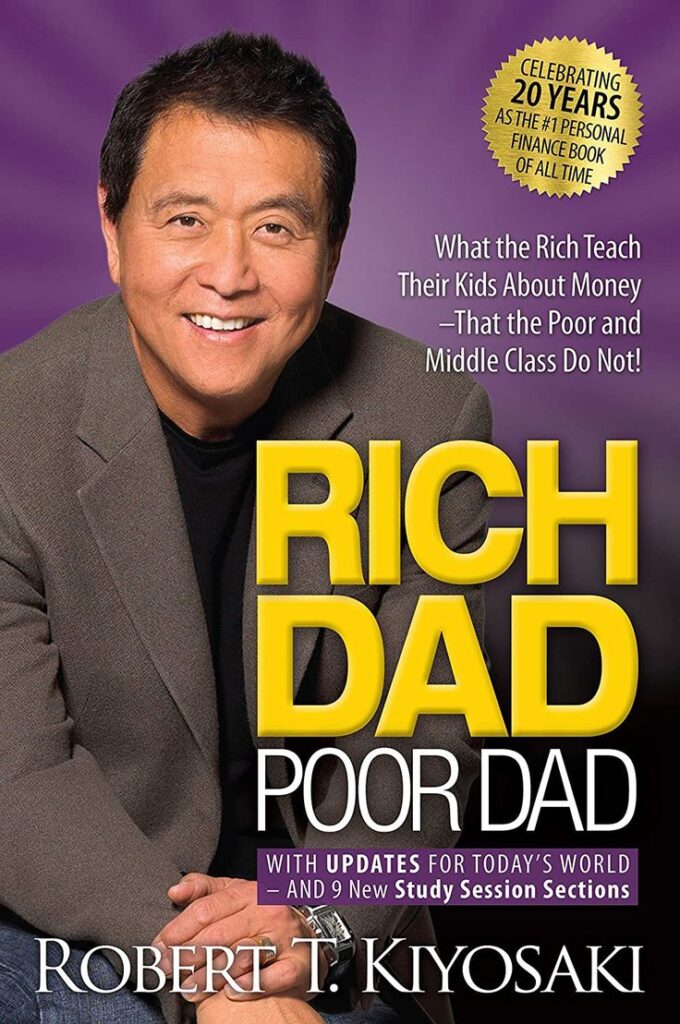
About the Author – Robert T. Kiyosaki
Robert T. Kiyosaki is an entrepreneur, investor, and financial educator best known for challenging traditional beliefs about money, jobs, and wealth.
He grew up with two father figures:
- His “Poor Dad” – highly educated, academically brilliant, but financially struggling.
- His “Rich Dad” – less formally educated, but financially intelligent and wealthy.
The contrast between these two philosophies forms the foundation of this book.
As Kiyosaki writes:
“It’s not how much money you make. It’s how much money you keep.”
The Core Idea: The Rich Don’t Work for Money
One of the most powerful lessons from the book:
“The poor and the middle class work for money. The rich have money work for them.”
Most people are trapped in what Kiyosaki calls the Rat Race:
- Get up
- Go to work
- Pay bills
- Repeat
Fear and desire drive this cycle:
- Fear of not having enough money.
- Desire for a bigger house, car, lifestyle.
The result?
More income… but also more expenses.
And the cycle continues.
Why Schools Don’t Teach Financial Education
Kiyosaki argues that schools train us to become good employees, not financially free individuals.
We are taught:
- Academic excellence
- Professional skills
- Job security
But rarely:
- How money works
- How taxes work
- How investing works
- The difference between assets and liabilities
He says:
“Financial education is more powerful than money.”
Money comes and goes.
Knowledge stays.
Asset vs Liability – The Simple Rule
One of the most famous lessons from the book is this:
“An asset puts money in your pocket. A liability takes money out of your pocket.”
Simple. Yet life-changing.
The wealthy focus on building assets:
- Businesses
- Investments
- Real estate
- Royalties
- Stocks
The middle class often buy liabilities thinking they are assets — bigger homes, cars, consumer debt.
Kiyosaki emphasizes the principle of KISS – Keep It Simple.
If you understand assets and liabilities, you understand the foundation of wealth.
The Psychology of Money – Fear & Greed
The book goes deeper than numbers.
It explores human behavior.
“Most people become slaves to money… and then get angry at their boss.”
Fear of losing money.
Fear of failure.
Fear of not being secure.
And greed — the desire for more.
These two emotions control most financial decisions.
The difference?
The rich learn to use emotions to think, not think with emotions.
Jobs Are Not the Final Solution
Kiyosaki calls a job:
“A short-term solution to a long-term problem.”
A job can pay bills.
But it does not automatically build wealth.
He even jokes that JOB stands for:
“Just Over Broke.”
The key question he suggests asking is:
Instead of saying:
“I can’t afford it.”
Ask:
“How can I afford it?”
That simple shift strengthens your financial thinking.
Mind Your Own Business
Another powerful lesson:
Build your own asset column while working your job.
You may work for someone else,
but your long-term focus should be building assets that generate cash flow.
Wealth, according to Kiyosaki, is measured by:
“How many days you can survive without working.”
That changes everything.
It’s About Financial Intelligence
The book emphasizes mastering key financial skills:
- Accounting
- Investing
- Understanding markets
- Tax advantages
- Risk management
- Communication & negotiation
He believes confidence matters more than intelligence:
“It’s not the smart who get ahead, but the bold.”
Who Should Read This Book?
This book is ideal for:
✔ Students who want financial awareness early
✔ Working professionals stuck in the 9–5 cycle
✔ Entrepreneurs in the making
✔ Anyone confused about money
✔ People who want mindset shift before income growth
Especially in countries like India, where job security is highly valued, this book challenges conventional thinking in a powerful way.
Why You Should Read It
You should read Rich Dad Poor Dad if:
- You want to understand money psychologically, not just mathematically.
- You want to break out of survival thinking.
- You want financial clarity before financial success.
- You feel something is missing in traditional education.
It won’t give you a step-by-step investment plan.
But it will change the way you see:
- Income
- Assets
- Debt
- Jobs
- Risk
- Wealth
And once your thinking changes, your financial direction changes.
Final Thoughts
This book is not about getting rich quickly.
It is about thinking differently.
It is about choosing the road less traveled — much like Robert Frost’s poem The Road Not Taken.
Financial freedom begins in the mind.
As Kiyosaki reminds us:
“The single most powerful asset we all have is our mind.”
The question is —
Will you train it?
Disclosure: This article contains affiliate links.
Explore more book summaries on Reading Axis. Book Summaries
Read the summary of Atomic Habits – Transform your life in 4 Laws https://thereadingaxis.com/atomic-habits-summary-4-powerful-laws-to-build-good-habits-and-break-bad-ones/
Read the summary of Psychology of Money – Timeless lessons https://thereadingaxis.com/psychology-of-money-summary/
Read the summary of Deep Work https://thereadingaxis.com/deep-work-book-summary/
Read the summary of 48 Laws of Power https://thereadingaxis.com/48-laws-of-power-summary-robert-greene/



6 thoughts on “Rich Dad Poor Dad Summary: 10 Powerful Money Lessons That Change Your Mindset”