

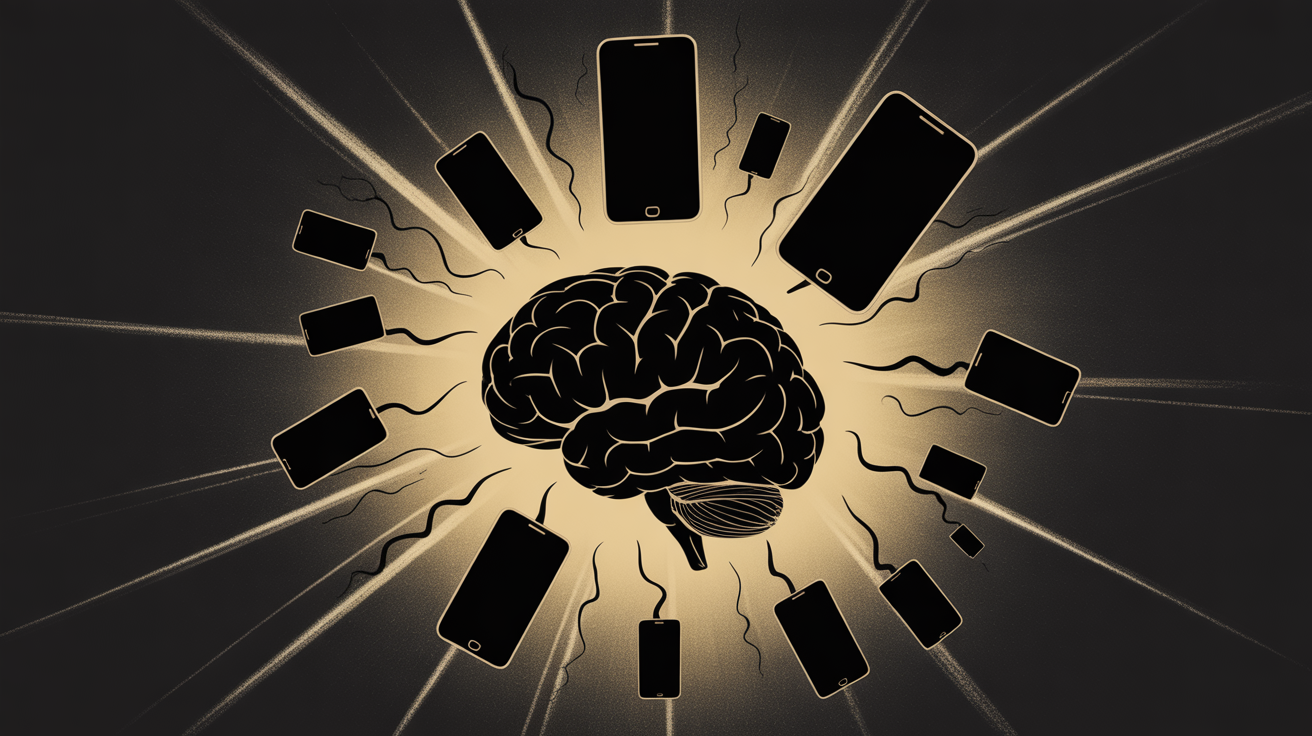
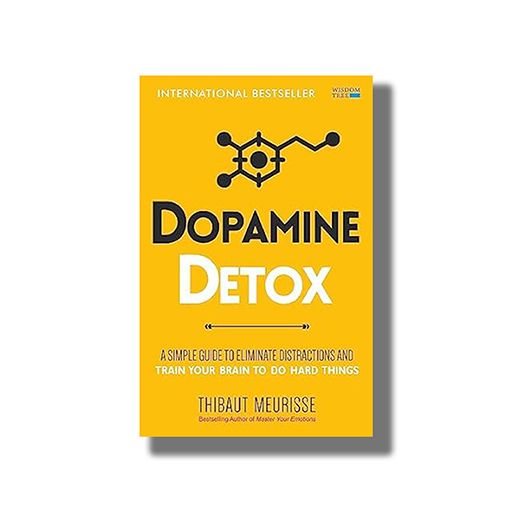
Dopamine Detox Book Summary – This is a short yet powerful guide about reclaiming focus in a world full of distractions. The book explains how modern life constantly pulls our attention toward quick pleasure—notifications, endless scrolling, shopping suggestions, and algorithm-driven content.
Instead of helping us achieve meaningful goals, these constant stimuli train our brains to seek instant gratification.
As the author writes:
“Dopamine isn’t the pleasure molecule; it’s the motivation molecule.”
Understanding this simple idea changes the way we think about productivity.
About the Author
The book is written by Thibaut Meurisse, a French blogger and personal-development writer.
Meurisse spent about a decade living in Japan, where he developed a deep interest in productivity, mindset, and long-term thinking. Through his blog and books, he focuses on practical frameworks that help readers reduce distractions and build disciplined habits.
What Is Dopamine?
Dopamine is a neurotransmitter that plays a key role in motivation and reward. It helped our ancestors survive by encouraging behaviors necessary for survival, such as finding food or reproducing.
However, in the modern world the same system is constantly triggered by artificial stimuli:
- social media notifications
- endless video recommendations
- online shopping suggestions
- algorithm-driven feeds
These systems are carefully designed to keep our attention.
As Meurisse explains:
“The more dopamine you get from easy activities, the harder it becomes to focus on meaningful work.”
This is why many people feel restless or unproductive even though they are constantly busy.
The Problem: A World of Constant Stimulation
Today’s environment is built to capture attention.
Apps send notifications.
Online stores recommend products.
Platforms continuously suggest new content.
Instead of using technology intentionally, many people find themselves checking phones repeatedly, searching for the next small dopamine hit.
The result is a cycle similar to running on a hamster wheel—always moving but rarely finishing meaningful tasks.
Short-Term Pleasure vs Long-Term Success
One of the book’s key themes is the importance of long-term thinking.
Research often shows that people who prioritize long-term rewards tend to:
- make healthier choices
- invest in their future
- develop stronger discipline
Meanwhile, constant stimulation pushes us toward immediate gratification—binge watching, scrolling, or jumping between tasks.
Meurisse argues that reducing stimulation allows the brain to recover its natural ability to focus.
What Is a Dopamine Detox?
A dopamine detox is not about eliminating dopamine—that would be impossible. Instead, it means temporarily removing highly stimulating activities so the brain can reset.
The goal is to create space for deeper thinking and meaningful work.
The book suggests experimenting with short detox periods, such as:
- 24-hour detox from digital distractions
- 48-hour detox for a deeper reset
- quiet activities like journaling, stretching, meditation, or mindful walks
During these periods, the mind slowly returns to a calmer state.
A Simple Three-Step Approach
The book proposes a practical framework to regain focus:
1. Identify Your Biggest Distractions
Write down the activities that constantly interrupt your focus—social media, notifications, entertainment platforms, or impulsive browsing.
2. Create Two Lists
- Can-do list: productive activities that support your goals
- Cannot-do list: distractions you want to reduce
3. Add Friction
Make distractions harder to access:
- keep your phone in another room
- disable notifications
- set timers or blockers
- start important tasks early in the morning
Small barriers make impulsive habits less automatic.
Building Deep Focus
To sustain focus, the book recommends creating consistent routines.
Work at the same place and time every day.
Remove interruptions before starting.
Allow yourself long stretches of uninterrupted concentration.
This state of full immersion—often called flow—is when productivity and creativity peak.
As the author notes:
“Less stimulation often leads to more motivation.”
Protecting Your Attention
One important reminder from the book is that the modern economy runs on capturing attention. Many platforms compete for it.
Because of this, maintaining focus requires intentional boundaries.
Simple practices like mindful walks, meaningful conversations, journaling, or meditation can activate healthier neurochemicals such as serotonin, oxytocin, and endorphins, creating a calmer mental state.
Final Thought
Dopamine Detox ultimately reminds us that discipline is not about forcing ourselves endlessly. It is about designing an environment that supports focus instead of fighting it.
By reducing constant stimulation and building intentional habits, we can retrain our minds to do the hard things that truly matter.
As Meurisse puts it:
“Your ability to focus will determine the quality of your results.”
Disclosure: This article contains affiliate links.
Explore more book summaries on Reading Axis. Book Summaries
Read the summary of Atomic Habits – Transform your life in 4 Laws https://thereadingaxis.com/atomic-habits-summary-4-powerful-laws-to-build-good-habits-and-break-bad-ones/
Read the summary of Psychology of Money – Timeless lessons https://thereadingaxis.com/psychology-of-money-summary/
Read the summary of Deep Work https://thereadingaxis.com/deep-work-book-summary/
Read the summary of 48 Laws of Power https://thereadingaxis.com/48-laws-of-power-summary-robert-greene/
Read the summary of Rich Dad Poor Dad https://thereadingaxis.com/rich-dad-poor-dad-summary/